
Mosquito Control Systems on Johns Island, SC
Johns Island runs to about 84 square miles, which makes it the fourth largest island on the East Coast and considerably bigger than most people realize when they are driving Maybank Highway. Around 21,500 people live on it, spread between working farms, older family land, tidal creek frontage, and a lot of new subdivisions. The Stono and the Kiawah bound it, six other islands surround it, and none of that geography is doing you any favors where mosquitoes are concerned.
Knockout Mosquito services the island end to end. We install automatic misting systems, run scheduled fogging routes, and treat for ticks and no-see-ums. No contracts, and we look at the property before quoting so the number reflects your lot rather than an average.
Why an Island This Big Has Several Different Mosquito Problems
The mistake people make on Johns Island is assuming their neighbor two miles away has the same situation they do. On an island this size, they usually do not.
Along the Stono and the Kiawah and up the tidal creeks, the driver is salt marsh. Spring tides flood the marsh surface, salt marsh mosquitoes emerge in enormous numbers a week or so later, and they fly. A property well back from the water still gets the brood, which is why people who bought inland specifically to avoid this are often surprised.
Across the farmed middle of the island, the source is completely different. Agricultural land here is ditched, and those ditches hold water for days after rain. Add irrigation ponds, field edges, and the low ground between rows, and you have textbook floodwater habitat. Those species hatch in synchronized pulses tied to rainfall rather than tides, so the timing of your bad weeks is different from your neighbor on the creek.
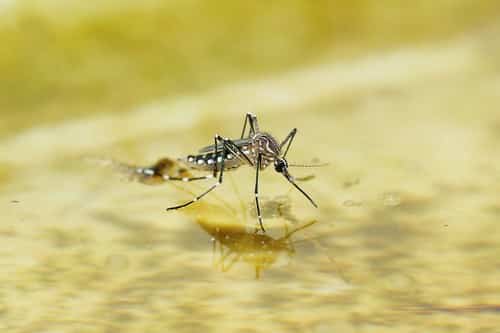
The newer subdivisions bring a third pattern. Stormwater retention ponds, irrigation systems running on timers, dense ornamental planting, and a high density of the small water-holding objects that Asian tiger mosquitoes breed in. That species bites during the day, does not travel far, and is almost always produced on the property it is biting you on. Saucers under pots, clogged gutters, tarps, kids’ toys, a wheelbarrow left upright.
And on the older wooded parcels, the live oak and palmetto canopy that makes those lots beautiful also holds humidity all day and gives mosquitoes somewhere cool to rest between feeding periods. Treating that resting habitat is the difference between a yard that improves for two days and one that stays improved.
The practical consequence is that a treatment plan built for a creekside lot on the east end is not the right plan for a farm parcel off Bohicket, and neither is it right for a subdivision lot near the Angel Oak. We would rather walk your specific property than quote you an island-wide average.
Contact Us
Mosquito Fogging
We offer monthly and weekly mosquito fogging services for residences throughout the Charleston SC area. Enjoy the outdoors, bug free!
Mosquito Misting System
Our mosquito misting systems in charleston SC provide year-round protection from mosquitos and other biting insects around your property.
Misting Systems for Johns Island Homes
A misting system is installed once and then works on its own. Tubing runs through the eaves, along fence lines, under deck framing, and through landscape beds, feeding nozzles that release a fine mist on a timer. Cycles normally run at dawn and dusk, and a remote lets you add one whenever you want it.
The argument for a system on Johns Island comes down to how close the sources are. If a tidal creek runs behind your property, or a ditched field sits across the road, the population outside your property line is effectively unlimited. Periodic fogging knocks down what is present on the day it happens. A system treating twice daily holds the perimeter against constant re-invasion, which on this island is what people are actually up against.
Designing around creeks, fields, and canopy
The design work matters more here than most places because the lots vary so much. On a creekside property we concentrate coverage on the water-facing side and the approach to a dock. On a farm parcel we work the house envelope and any outbuilding you spend time near, and we account for the fact that a field edge will keep producing regardless. On a subdivision lot the job is often as much about eliminating on-site breeding as it is about the mist itself, so we will point out the standing water we find while we are walking it.
Canopy affects nozzle placement and spacing. Heavy live oak cover changes how the mist moves and where it settles, and a system laid out as though the lot were open will leave gaps under the trees, which is exactly where the mosquitoes are.
Refills and ongoing service
We return on a schedule to refill the reservoir, clear and check nozzles, look over the pump, and shift cycle timing as the season moves. Systems on this island tend to run harder than systems in town, so plan on a slightly shorter refill interval than a brochure would suggest.
Fogging Service on Johns Island
Fogging suits properties where a permanent install does not make sense, whether that is because you are renting, because you are selling, or because your problem is genuinely seasonal. We treat with backpack and truck-mounted equipment aimed at where mosquitoes rest rather than where they fly. Undersides of foliage, the interior of dense shrubs, fence and treelines, brush piles, the shaded foundation, and low vegetation along ditches.
Interval depends on which part of the island you are on. Creekside properties frequently want every two weeks through the peak of summer because the tidal broods keep arriving. Inland and subdivision lots often hold fine at three or four weeks. We start at a sensible interval and adjust based on what your yard actually does, and we will tell you if you are paying for more frequency than you need.
One-off treatments for events
Weddings, oyster roasts, farm dinners, graduation parties, anything happening outdoors between April and October. We treat a day or two ahead of the date so the application has time to settle. Give us the date and the footprint, and we will handle it.
Ticks and Biting Midges on the Island
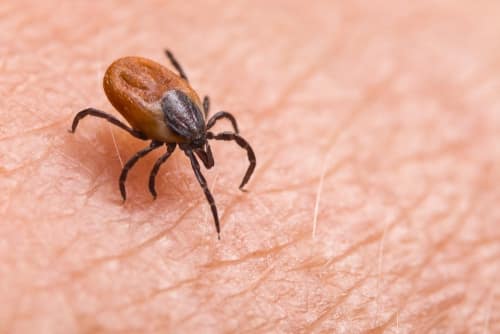
Johns Island has a heavy tick population, particularly on the wooded and agricultural parcels. Lone star ticks are the common one, and they are persistent about finding a host. American dog ticks turn up along field edges and paths. If you keep dogs or horses, or you walk a treeline regularly, ticks deserve treatment in their own right rather than as an afterthought to mosquito service.
Because ticks do not fly, the treatment is geographically specific. They wait on vegetation at ankle and knee height where mowed ground meets woods, brush or tall grass, so that boundary is where the application goes, along with leaf litter, shrub bases, and the edges of trails and paths. It is a band, not a broadcast.
No-see-ums are the other complaint, and they are worst on the creek and marsh side of the island. Biting midges breed in wet organic mud; they pass straight through standard screening, and they are at their most aggressive around dawn and dusk. Nothing eliminates them outright, but frequent treatment from a misting system reduces them substantially, and fogging helps for a shorter window.
Where We Work on Johns Island
We cover the whole island, from the Maybank corridor and the neighborhoods near the Angel Oak out toward Bohicket and River Road, and down to the properties fronting the Stono and the Kiawah. Wadmalaw is next door, and we work there too, along with Kiawah, Seabrook, and James Island. Our office is on Daniel Island, and we service the greater Charleston area from there.
Residential and commercial both. On Johns Island, that means houses and farms, but also event barns, restaurants with outdoor seating, nurseries, and job sites where crews are outside through the summer.
Getting Ahead of the Season
Start in March if you can. Lowcountry mosquito activity picks up early, and the first generation of the year determines the size of everything that follows. Suppressing a small population is a much easier job than clawing back a yard in July, and it usually costs less over the season.
For misting systems, install in late winter or early spring so the system is running before pressure builds. June installations work fine, but you have given away the good half of the year.
Service runs into late fall here, and in a mild winter some species never fully stop. We stretch the interval through the shoulder months instead of stopping, because properties that go untreated from September onward tend to start the next spring further behind.
Testimonials
Our Blog on Mosquito Control Systems
A single mosquito bite can spread illnesses such as West Nile Virus, Encephalitis, Malaria, Chikungunya and even Heartworm in pets. Ticks are also a threat and can spread Lyme disease, Erlichiosis, and Rocky Mountain Spotted Fever. To find out more about how to control these pests and to protect your family, read our blog.
.
No Contracts, No Hassle, No Worries!
Johns Island Mosquito Control FAQs
Why is my end of Johns Island worse than my friend’s?
Because the island is 84 square miles and the mosquito sources are not evenly distributed. Creek and marsh frontage gives you saltmarsh broods on a tidal schedule. The farmed middle gives you floodwater species on a rainfall schedule. The newer subdivisions give you day-biting Asian tiger mosquitoes bred on the property itself. Two houses a few miles apart can have genuinely different problems that need different treatment plans.
Does the county spray program cover the island?
Charleston County runs mosquito control that includes truck routes and, in heavy years, aerial treatment, and it does reduce numbers across the island. What it does not do is treat the resting habitat on your particular lot. ULV application kills what is flying when it passes. The population sheltering in your shrub line at noon is untouched, and that is the population that repopulates your yard by evening.
We back onto a tidal creek. Is anything actually going to work?
Yes, though expectations matter. You are not going to eliminate the marsh, and anyone telling you otherwise is selling something. What you can do is hold your own property. A misting system running daily on the water-facing side of the house makes a large difference for creekside lots specifically because it treats continuously against continuous arrival. Fogging alone on a two-week interval is workable, but you will notice the tail end of each cycle.
We are on a farm parcel. Will treatment help when there is a wet field next door?
It helps considerably, but the plan should be honest about the field. We concentrate on the house envelope, the outbuildings you use, and the vegetation between you and the source, rather than pretending we can treat the neighbor’s ground. Where there is standing water on your own property that is genuinely producing, larval treatment is more efficient than chasing the adults.
Are the products safe around kids, dogs, horses, and chickens?
They are registered for residential use and applied at label rate, and the standard practice is to stay off treated surfaces until dry, usually about half an hour. Tell us before the first visit what animals are on the property. We adjust placement around pens, runs, stalls and coops, and we buffer around beehives as a matter of course.
How often should we fog?
Every two weeks through midsummer for creekside properties, three to four weeks for most inland and subdivision lots. We do not fix the interval before seeing how your yard responds. If you are holding well at four weeks, we will say so rather than keeping you on two.
Will a misting system work under heavy oak canopy?
Yes, but the layout has to be designed for it. Canopy changes how the mist disperses and where it settles, and a system spaced as if the lot were open leaves gaps under the trees, which is precisely where mosquitoes rest during the day. Getting that right is a large part of what the site walk is for.
What can I do myself between treatments?
On subdivision lots, a great deal. Asian tiger mosquitoes breed in very small amounts of water, and they do not travel far, so most of what is biting you during the day came from your own yard. Empty saucers under pots, clear gutters, turn over anything that collects rain, refresh bird baths weekly, and check tarps and covers after storms. On creekside and farm parcels, this matters less, because the source is off-property.
Do you require a contract?
No. No annual agreement, no cancellation fee, on either fogging service or misting system service. If it is not working, tell us, and we will fix it or stop.
Can you treat for ticks as well?
Yes, and on the wooded and agricultural parts of the island we usually recommend it. It targets the edge where mowed ground meets woods or tall grass, plus leaf litter, shrub bases, and trail edges. We can do it on the same visit, and it is quoted separately because it is a genuinely different application.
Can you do a single treatment for an event?
Yes. One-time fogging for weddings, farm dinners, oyster roasts and parties is routine work for us, and we schedule it 24 to 48 hours ahead. Call with the date and the area.
When should we start for the year?
March. The first generation of the season sets the population for the rest of it, and getting ahead of that generation makes every month afterward easier. If a misting system is on your list, aim to have it installed by late winter.