
Mosquito Control Systems in Isle of Palms, SC2026-08-25T03:06:46+00:00

Mosquito Control Systems on Isle of Palms, SC

Isle of Palms sits with the Atlantic on one side and several thousand acres of salt marsh on the other. That back side is the problem. The marsh along the Intracoastal Waterway, the flats behind Hamlin Creek and Morgan Creek, the ditches and pannes that hold water after a spring tide- all of it breeds salt marsh mosquitoes in numbers that catch new residents off guard. When a big tide floods marsh that has been dry for a few weeks, eggs that have been sitting in the mud hatch together. A week later, they are on your deck. It does not matter that you are four blocks from the marsh. These mosquitoes fly.

Then there is the built environment. Most houses on the island stand on pilings, which means every property has a shaded, damp, wind-protected space underneath it where mosquitoes rest through the heat of the day. Add a heavy vacation rental market where guests change over every Saturday, and nobody is walking the yard looking for a saucer under a potted palm holding a half-inch of water. Add salt air that eats ordinary metal fittings within a season or two. That combination is why generic mosquito treatment often underperforms on this island while working fine ten miles inland.

Knockout Mosquito installs automatic misting systems and runs recurring fogging service across Isle of Palms, from Breach Inlet up through Wild Dunes, along Palm Boulevard and Ocean Boulevard, on the marsh-side streets near the 41st Avenue marina, and at commercial properties around Front Beach. We work on year-round homes, second homes, short-term rentals, and businesses. Call 843-270-1729 for a free walk-through of your property. We look at where water sits, where the mosquitoes are resting, and what the marsh is doing to you, then tell you what it would take to fix it. No obligation, and no contract to sign.

Why Isle of Palms Yards Get Hit Harder

Why Isle of Palms Yards Get Hit Harder

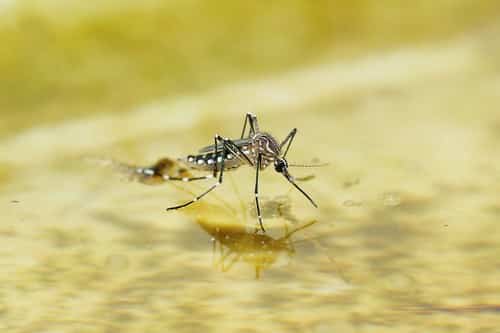
The black salt marsh mosquito, Aedes taeniorhynchus, is the one that ruins evenings here. It lays eggs on damp marsh soil above the normal waterline, and those eggs wait. Sometimes for weeks. When a spring tide or a heavy rain floods that ground, the whole batch hatches at once, which is why the island can go from tolerable to unusable in about six days with no warning. This species is an aggressive biter and a strong flier, capable of covering a mile or more from where it emerged, so the marsh behind Hamlin Creek is very much your problem even if your house faces the ocean. It bites hardest around dawn and dusk and will bite through the middle of the day in shade.

The Asian tiger mosquito, Aedes albopictus, works differently and needs a different answer. It breeds in containers: plant saucers, clogged gutters, tarps, kayaks left upright, kids’ toys, the tray under an outdoor shower, corrugated drain pipe, boat covers, upturned trash lids. It rarely travels more than a couple hundred yards from where it hatched, so if tiger mosquitoes are biting you in the afternoon, they were almost certainly born in your yard or your neighbor’s. Rental properties accumulate this stuff badly. Guests leave a bucket, a cooler lid, a beach toy, and the next group arrives without anyone emptying anything. Over a summer, a single rental can build up a dozen small breeding sites, and each one produces a fresh generation about every week to ten days in Lowcountry heat.

Elevated construction gives both species somewhere to spend the day. Underneath a house on pilings, you get deep shade, humidity that never really drops, no wind, and usually some combination of stored gear, sand, and vegetation right at the edge. Mosquitoes do not spend their lives in the open air. They rest in cool dark places and come out to feed, which means the space under your house, the storage area, and the shrub line around the pilings hold the population that bites you at six in the evening. Treat the lawn and skip underneath, and you have missed most of them.

Island planting finishes the job. Wax myrtle, palmetto, oleander, pittosporum, live oak with resurrection fern, and thick hedge lines along property borders create exactly the humid, shaded, ground-level cover that adult mosquitoes want. Irrigation keeps that ground cover damp through the driest stretch of August. Where sprinkler heads overspray onto mulch beds under a myrtle hedge, you have a resting site that stays viable all summer regardless of rainfall. Most Isle of Palms yards have several.

Contact Us


    Mosquito Fogging

    We offer monthly and weekly mosquito fogging services for residences throughout the Charleston SC area. Enjoy the outdoors, bug free!

    Mosquito Misting System

    Our mosquito misting systems in charleston SC provide year-round protection from mosquitos and other biting insects around your property.

    Mosquito Misting Systems for Isle of Palms Homes

    A misting system is installed much like an irrigation system. Small-diameter tubing runs discreetly along the fence line, through the eaves and soffits, into hedge lines and along the underside of the deck, with nozzles set every eight to ten feet at the points where mosquitoes actually rest. A drum of concentrate and a pump sit in an enclosed cabinet, usually tucked under the house or beside the outdoor storage. Twice a day, at dawn and again at dusk, the timer opens the system, and the nozzles release a fine mist for roughly thirty to sixty seconds. Timing matters. Those are the windows when mosquitoes are most active and least likely to be sheltered deep in cover. There is also a remote so you can trigger an extra cycle before people arrive on the porch, which is the feature most homeowners end up using constantly.

    For island installs, the details that matter are different from an inland job:

    • Corrosion-rated fittings, nozzles, and cabinet hardware, because salt air off the Atlantic and off the marsh will pit standard components and leave you with a system that weeps at every joint by the second season.
    • We run nozzle lines into the space under elevated houses rather than treating only what is at eye level. The pilings, the underside of the decking, and the storage area are where the day population sits, and skipping them is the single most common reason a system underperforms on this island.
    • Weighting toward the marsh side. On properties backing Hamlin Creek, Morgan Creek, or the Intracoastal, we put more nozzles and more coverage on the exposure that mosquitoes arrive from, instead of spacing everything evenly around the property.
    • Unattended operation suits second homes and rentals. The system runs on its schedule whether anyone is on the island or not, so a house that sits empty from October to March, or one that changes guests every Saturday, is still protected without a single person doing anything.
    • Refills and routine maintenance are included in the service, so nobody has to notice the drum is low, and a botanical concentrate is available if you prefer a plant-derived active ingredient.

    Most residential installs are done in a single day. Larger properties, complicated elevations, or multiple structures can run into a second day. We walk the property first, mark nozzle placement with you, and confirm the layout before any tubing goes up.

    Mosquito Fogging Service on Isle of Palms

    Fogging is the right call when you do not want hardware on the house, when you are renting rather than owning, or when the property only needs coverage through the season. It also fits commercial work well. Restaurants and shops around Front Beach with outdoor seating, the businesses and docks near the marina on 41st Avenue, rental management companies covering a portfolio of houses, HOA common areas and pool decks all get treated on a recurring schedule.

    A technician does not simply walk the property with a fogger running. The treatment goes onto the surfaces where mosquitoes rest during the day: the underside and lower surfaces of shrubs and hedges, the shaded side of the house, fence lines, the space under decks and stairs, ground cover, tree trunks up to about ten feet, and the area beneath elevated homes. Applied properly, the residual stays active on that foliage for weeks and kills mosquitoes that land there long after the truck has left. Products are EPA-registered and applied at label rates.

    Source reduction happens on the same visit. The technician walks the property looking for standing water, dumps what can be dumped, and points out the things you will need to handle, such as a gutter that is holding water at one corner or a boat cover that pools. Water that cannot be drained, like a low spot that stays wet, a rain barrel, a drainage box, or an ornamental feature, gets treated with larvicide so it stops producing adults. On rental properties, this part is usually where the biggest gains are.

    Three ways to run it:

    • Monthly service through the season, the standard choice for most homes.
    • Every two weeks or weekly, for marsh-facing properties, heavily wooded lots, and commercial sites where people are outside constantly and a lapse is immediately noticeable.
    • One-time treatment ahead of a specific date. A wedding at a beach house, a rehearsal dinner, a company gathering, a family reunion week, a rental turnover before a big group arrives. We treat a day or two out so the property is ready when guests are.

    No contracts. If it is not working for you, stop.

    Ticks, No-See-Ums, and What Else We Handle

    No-see-ums, the biting midges that come off the marsh at dusk, are a genuine Isle of Palms complaint and often worse than the mosquitoes in spring and fall. They breed in the wet organic mud of the marsh edge, which is not somewhere anyone can treat, and they are small enough to pass through standard window screens. Barrier treatments to your yard’s foliage and the space under the house do knock down the numbers that reach you, and misting cycles help during the dusk window when they are worst. We will tell you honestly that midges are harder to control than mosquitoes. Marsh-front properties see improvement, not elimination.

    Ticks live in the maritime scrub and the leaf litter along the wooded edges of the island, particularly in the areas with live oak, yaupon, and thick undergrowth. They wait on low vegetation for something to brush past, so the risk sits along path edges, in unmowed borders, and wherever the yard meets natural growth. Tick treatments target those transition zones and the leaf litter rather than the open lawn, and they pair well with keeping the border cut back and the litter thinned.

    There are health reasons to take this seriously beyond the itching. Mosquitoes in South Carolina can transmit West Nile virus and eastern equine encephalitis, both of which are uncommon but serious. Ticks in this region carry Lyme disease, ehrlichiosis, and Rocky Mountain spotted fever. The lone star tick, which is present across the Lowcountry, is associated with alpha-gal syndrome, a red meat allergy triggered by a tick bite. Mosquitoes also transmit canine heartworm, which is a year-round concern for dogs here given how mild the winters are. Reducing the biting population around the house reduces exposure for everyone using the yard, including the dog.

    Areas We Serve on Isle of Palms

    • Wild Dunes, including the resort and residential sections at the north end of the island
    • Palm Boulevard and the residential streets running between it and the beach
    • Ocean Boulevard and the Front Beach area
    • The 41st Avenue marina and the surrounding marsh-side properties
    • The Breach Inlet end of the island, toward the Sullivan’s Island bridge
    • Marsh-front homes along Hamlin Creek and Morgan Creek and the Intracoastal Waterway side

    We cover the surrounding area as well, including Sullivan’s Island, Mount Pleasant, Dewees Island, Daniel Island, Awendaw, Downtown Charleston, James Island, Johns Island, Kiawah Island, Seabrook Island, Folly Beach, West Ashley, Summerville and North Charleston. Our office is on Daniel Island, so Isle of Palms is a short run over the Connector.

    When to Start, and Why Earlier Is Cheaper

    The Lowcountry mosquito season effectively runs from March into November, and in mild years the biting never fully stops. Salt marsh broods usually announce themselves in April, sometimes late March after a warm wet spell, and the population builds through the summer with each flood tide adding another wave. August and September are typically the worst stretch on the island, made worse by the tropical rain that comes with that part of the calendar. Things ease off in November when night temperatures drop, though a warm week in December can still produce biters.

    Starting in March or early April is meaningfully more effective than starting in July, and it usually costs less over the season. Treat before the first big broods, and you are killing the founding generation, which means fewer eggs laid in your yard, fewer container sites active, and a smaller population to fight in August. Start in midsummer, and you are working against a population that has had four months to compound. Same product, harder job, more visits to get on top of it.

    If Isle of Palms mosquitoes have been costing you the use of your own porch, or your rental guests have been mentioning it in reviews, call 843-270-1729, and we will come walk the property. The walk-through is free, and there is no obligation. We will look at the marsh exposure, the space under the house, the irrigation, and every container we can find, then tell you whether a misting system or recurring fogging makes more sense for how you actually use the property.

    Testimonials

    Our Blog on Mosquito Control Systems

    A single mosquito bite can spread illnesses such as West Nile Virus, Encephalitis, Malaria, chikungunya, and even Heartworm in pets. Ticks are also a threat and can spread Lyme disease, Ehrlichiosis, and Rocky Mountain Spotted Fever. To find out more about how to control these pests and to protect your family, read our blog.

    .

    No Contracts, No Hassle, No Worries!

    Isle of Palms Mosquito Control FAQs

    Why are mosquitoes so bad on Isle of Palms?

    You are on a barrier island with several thousand acres of salt marsh behind you. Salt marsh mosquitoes lay eggs on damp marsh soil, and when a spring tide or a heavy rain floods that ground, an enormous brood hatches at the same time and disperses inland, easily a mile or more. On top of that, container-breeding mosquitoes reproduce in your own yard, and elevated houses give both species shaded resting space underneath. The marsh you cannot control. The property you can.

    Doesn’t Charleston County already spray for mosquitoes?

    Charleston County operates a public mosquito control program covering parts of the county, and its work is aimed at broad population reduction across large areas rather than at any individual property. Coverage, methods, and scheduling are set by the county, so check with them directly for what applies to your address. Regardless of what happens at that level, county work does not address the breeding sites in your own yard, the resting cover in your hedges, or the space under your house. Property-level treatment handles what area-wide spraying is not designed to reach.

    How much does mosquito control cost on Isle of Palms?

    It depends on the property, so we quote after we have seen it. Lot size, how much marsh frontage you have, how densely the yard is planted, whether the house is elevated and how much space needs covering underneath, and whether you want a misting system or recurring fogging all change the number. A misting system is an upfront install plus ongoing service that includes refills and maintenance. Fogging is priced per visit at whatever cadence suits you. The walk-through is free, and there is no obligation to book.

    Will treatment help with no-see-ums?

    Partly, and we would rather be straight with you than oversell it. No-see-ums breed in the wet mud at the marsh edge, which nobody can treat, so you are always going to have some pressure on the back side of the island. What treatment does is reduce the numbers that make it into your yard and cut down the population resting in your foliage and under the house. Misting cycles timed to dusk help most, since that is when midges are worst. Marsh-front properties see real improvement rather than total relief.

    Is it safe around children and pets?

    We use EPA-registered products applied at the label rates, which are the rates tested and approved for residential use. The standard guidance is to keep people and pets off treated foliage until it has dried, generally around thirty minutes to an hour. With a misting system, cycles are scheduled for dawn and dusk when nobody is usually out on the lawn, and the mist settles quickly. If you have particular concerns, whether that is a pond with fish, a vegetable garden, beehives, or a pet with health issues, tell us at the walk-through and we will plan the layout around it. A botanical concentrate is available.

    How often does fogging need to be done?

    Monthly works for most Isle of Palms homes through the season. Properties backing the marsh along Hamlin Creek or Morgan Creek, heavily planted lots, and commercial sites with outdoor seating usually want every two weeks, and some go weekly during the worst of August and September. The residual on treated foliage holds for weeks, but new mosquitoes keep arriving off the marsh, so the schedule is about maintaining pressure rather than a single knockdown. We will suggest a cadence after seeing the property, and you can change it whenever you want.

    When does mosquito season start and end here?

    Practically speaking, March through November, with the peak from June into September. Salt marsh broods typically show up in April, though a warm, damp March can bring them earlier. Late summer is the hardest stretch because heat, tropical rain, and high tides all line up. Biting drops off through November as nights cool, but the Lowcountry rarely gets a hard enough freeze to end it cleanly, and a warm December week can bring mosquitoes back. Heartworm risk for dogs is effectively year-round on the coast for that reason.

    Can you treat a vacation rental I do not live at?

    This is a large part of what we do on the island. A misting system runs on its own timer with no one present, so guests get a treated yard every week without anything being asked of them or of you. Refills and maintenance are on us. If you prefer fogging, we schedule around your turnover calendar and treat between guests, and we flag standing water we find so your cleaning crew can deal with recurring container sites. Owners off-island get the same service as owners who live here.

    Our house is on pilings. Can you treat underneath?

    Yes, and you should. The space under an elevated house is the single most productive resting area on most Isle of Palms properties: deep shade, trapped humidity, no wind, and usually stored gear and vegetation at the perimeter. Misting nozzles get run into that space along the pilings and the underside of the decking, and on fogging visits, the technician treats under the house along with the shrub lines and fences. If a company treats only your lawn and hedges, they are leaving most of the population untouched.

    Does salt air damage misting system equipment?

    It will damage the wrong equipment, which is why island installs are specified differently. We use corrosion-rated fittings, nozzles, and cabinet hardware for properties in this environment, because standard components exposed to salt air off the ocean and the marsh start pitting and leaking within a season or two. The cabinet goes somewhere sheltered, usually under the house or beside the storage area. Maintenance is part of the ongoing service, so nozzles get checked and cleared and worn parts get replaced rather than waiting until you notice a problem.

    Can you treat before a wedding or party?

    One-time event treatments are available and popular here, particularly for beach house weddings, rehearsal dinners and reunion weeks. Book it a few days out, and we will treat one to two days before your date so the residual is fresh when guests arrive. The technician covers foliage, fence lines, under decks and the space beneath the house, and handles any standing water on the property. If you already have a misting system, hit the remote about half an hour before people arrive for an extra cycle. No ongoing commitment is required for a one-time treatment.

    What other areas near Isle of Palms do you cover?

    Sullivan’s Island, Mount Pleasant, Dewees Island, Daniel Island, Awendaw and the rest of the East Cooper area, plus Downtown Charleston, James Island, Johns Island, West Ashley, Folly Beach, Kiawah Island, Seabrook Island, Summerville and North Charleston. The office is on Daniel Island. If you own more than one property, say a house on Isle of Palms and another in Mount Pleasant, we can run both on the same service schedule. Call 843-270-1729 to check coverage for a specific address.