

Standing Water Mosquitoes: Control Breeding Sites Now
- Serving the Lowcountry since 2004
- Rated 5.0 on Google
- Residential and commercial
Request a Free Quote
Tell us a little about your property and we will be in touch.
Standing Water Mosquitoes: Control Breeding Sites Now
Standing water mosquitoes are any mosquito species that use stagnant water to lay eggs and complete their life cycle, making every puddle, pot saucer, or clogged gutter a potential breeding ground. North Charleston’s warm, humid climate extends the active mosquito season well beyond what most homeowners expect. A single tablespoon of stagnant water can breed hundreds of mosquitoes. That fact alone changes how you think about your yard. The mosquito life cycle in water moves fast. Mosquitoes can develop from egg to adult in as little as 3–4 days during warm weather, which means a missed inspection is never just a minor oversight.
What are common standing water mosquito breeding sites around your home?
Most homeowners think about bird baths and buckets. The real problem is the sites they never check.
Common, visible breeding sites include:
- Bird baths that go unchanged for more than a week
- Plant saucers under potted plants, indoors and outdoors
- Buckets, wheelbarrows, and trash can lids that collect rainwater
- Clogged rain gutters where debris holds moisture for days
- Tarps and pool covers with low spots that pool water
- Rain barrels without tight-fitting lids or screens
Hidden sites are where most infestations actually start. Bottle caps, the folds of a tarp, tree holes, and even the corrugated plastic of downspout extenders hold enough water to support larvae. These cryptic reservoirs are easy to miss on a quick walkthrough.
The biology makes this worse. Some mosquito species lay eggs in areas prone to flooding, where those eggs can lie dormant for months or even years. They hatch only when conditions become favorable again. This means a container you emptied last fall and left sitting upside down in the yard can still harbor viable eggs when spring rains arrive.
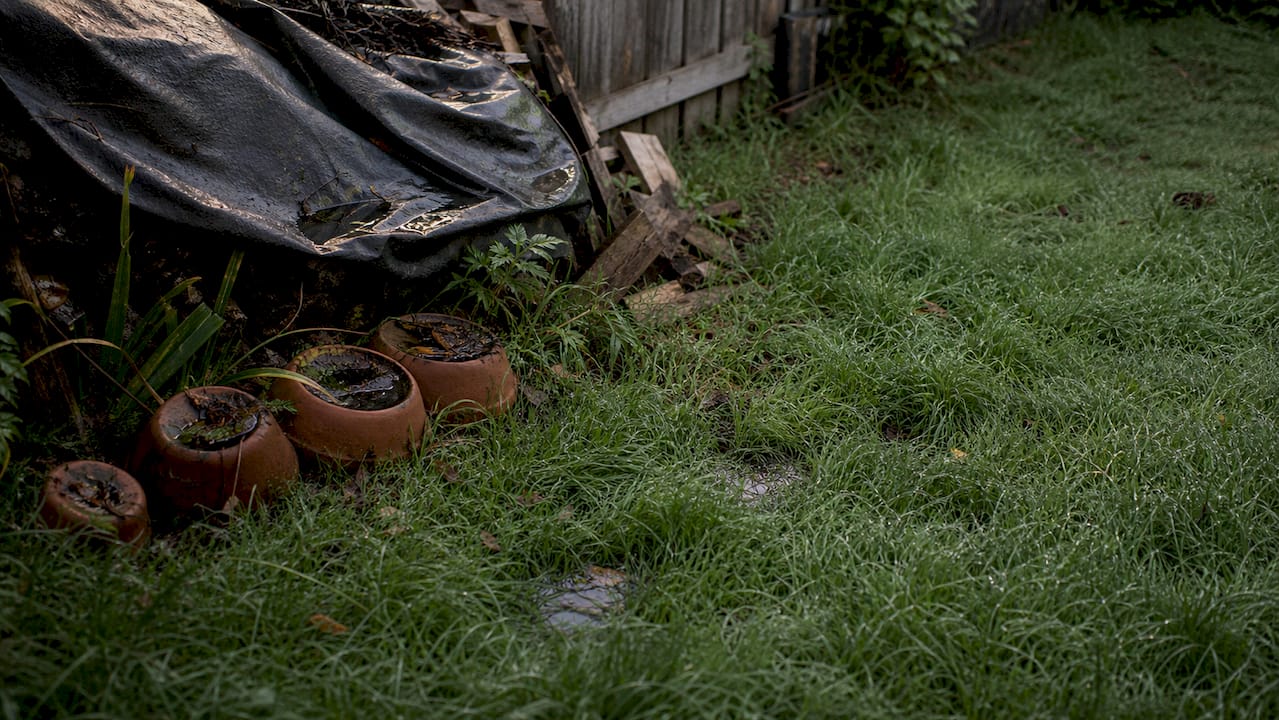
Eggs often stick to container walls and survive dry conditions for extended periods. Emptying a container is not enough. You need to scrub the interior walls or flip the container so it cannot collect water again.
Pro Tip: Walk your property after every significant rainfall. North Charleston averages heavy rain events throughout spring and summer, and new breeding sites appear faster than most homeowners realize.
How do inspections interrupt the mosquito breeding cycle?
The mosquito life cycle in water has a tight timeline, and that timeline is your best tool.
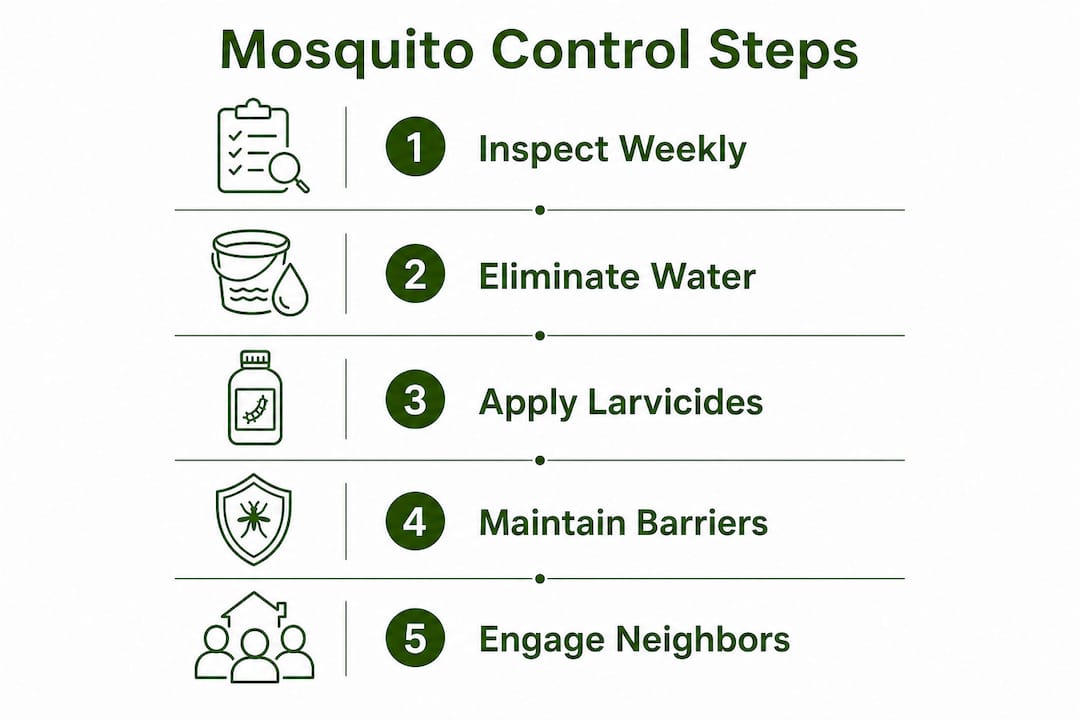
Mosquito larvae live approximately 7–10 days before transforming into pupae, and adults emerge within 3–4 days after that. The entire process from egg to flying adult can finish in under two weeks. Weekly inspections and water removal cut that cycle off before adults ever emerge.
Follow this inspection routine to eliminate mosquito breeding sites effectively:
- Check all containers every 7 days. Remove, empty, and scrub anything that holds water, including pet dishes, flower pot saucers, and decorative containers.
- Refresh bird bath water at least every 7 days. Refreshing bird bath water weekly interrupts larval development before it completes.
- Clear rain gutters of debris. Clogged gutters are one of the most productive mosquito breeding sites on a residential property. Clean them at the start of spring and after heavy leaf fall.
- Drill drainage holes in containers you cannot remove. Recycling bins, tire swings, and decorative planters that must stay outdoors should have holes drilled in the bottom to prevent water accumulation.
- Flip or store unused containers. Wheelbarrows, buckets, and tarps should be stored upside down or under cover when not in use.
Pro Tip: Set a weekly phone reminder for your inspection. Consistency matters more than thoroughness on any single visit. A quick 10-minute walk every seven days beats a thorough inspection once a month.
The 3–4 day development window is the critical number here. It means that if you inspect on a Saturday and skip the following weekend, a new generation of adults may already be flying by the time you check again.
What are effective methods for standing water that cannot be drained?
Not every water source can be removed. Ornamental ponds, rain barrels, and low-lying areas that flood seasonally require a different approach.
The gold standard for these situations is Bti, short for Bacillus thuringiensis israelensis. Bti larvicides are safe for pets, fish, and wildlife while effectively targeting mosquito larvae in permanent water bodies. Bti is available in two common forms: mosquito dunks, which are donut-shaped rings you float in standing water, and mosquito bits, which are granules you sprinkle over larger areas. Both release the biological agent as they dissolve, killing larvae before they mature.
Additional control methods for water you cannot drain include:
- Larval traps that use fermented organic material to attract and kill larvae before they develop into adults
- Tight-fitting screens or lids on rain barrels to block adult mosquitoes from laying eggs on the water surface
- Aeration systems for ornamental ponds, since moving water is far less hospitable to larvae than still water
The World Health Organization’s framework for this approach is called Larval Source Management, or LSM. LSM integrates environmental modification, biological controls, and targeted larviciding as a combined strategy. The key principle is that no single method works in isolation. Draining what you can, treating what you cannot drain, and modifying the environment to reduce future pooling all work together.
| Water source | Recommended control method |
|---|---|
| Rain barrel | Tight lid or screen; Bti bits |
| Ornamental pond | Aeration; Bti dunks |
| Low-lying yard areas | Grading or French drain; Bti bits |
| Tree holes | Fill with sand or mortar |
| Decorative fountain | Run pump continuously; Bti dunks |
A non-chemical option worth knowing: mosquitoes are weak fliers. Placing a box fan on your porch creates enough airflow to keep them from landing. It does not eliminate breeding sites, but it reduces bites while you work on the underlying problem.
Why does neighborhood cooperation matter for mosquito control?
Treating your own yard thoroughly is necessary. It is not sufficient on its own.
Mosquitoes travel several miles, which means a neglected property two streets over can re-infest your yard within days of treatment. Homeowners who treat only their own yards often see re-infestation quickly because mosquito populations do not respect property lines. This is the single most underestimated factor in residential mosquito control.
Coordinated neighborhood action multiplies the impact of individual effort. When multiple households remove breeding sites in the same week, the local mosquito population has fewer places to reproduce across the entire area. The cumulative reduction is far greater than the sum of individual efforts.
“Mosquito management is truly a neighborhood project. When neighbors work together to eliminate breeding sites, the results are dramatically better than any single homeowner can achieve alone. Reporting neglected properties with standing water to local code enforcement is not just civic duty. It is one of the most effective mosquito control actions available to residents.”
Practical steps for neighborhood-scale mosquito control include organizing a community cleanup day before peak mosquito season, sharing inspection checklists with neighbors, and reporting chronically neglected properties with standing water to North Charleston code enforcement. HOA boards and property managers are well-positioned to coordinate these efforts across multiple units or lots.
Key Takeaways
Eliminating standing water mosquito breeding sites requires weekly inspections, biological larvicides for water that cannot be drained, and coordinated action across neighboring properties for lasting results.
| Point | Details |
|---|---|
| Minimum breeding volume | A tablespoon of stagnant water is enough to breed hundreds of mosquitoes. |
| Inspection frequency | Inspect and remove standing water every 7 days to interrupt the larval cycle. |
| Dormant eggs | Scrub container walls, not just empty them, since eggs survive dry conditions for months. |
| Bti for permanent water | Use Bti dunks or bits in ponds and rain barrels where drainage is not possible. |
| Neighborhood cooperation | Isolated yard treatment fails without neighbors addressing their breeding sites too. |
What I’ve learned from watching yards in North Charleston
The most common mistake I see is homeowners who do everything right in their own yard and then wonder why mosquitoes are still bad. They treated the symptom on their property but left the source two houses down untouched.
The second most common mistake is underestimating cryptic breeding sites. A bottle cap wedged in the mulch, a tarp with a single low fold, a forgotten toy in the back corner of the yard. These tiny reservoirs produce adults just as reliably as a neglected bird bath. The biology does not care about the container’s size.
Regular inspection routines feel tedious until you realize the alternative is spraying repellent every time you step outside. I have found that the homeowners who build the 10-minute weekly walkthrough into their Saturday morning routine see the biggest long-term results. It becomes automatic, and the yard stays manageable. For choosing the right control method for your specific property, the combination of source removal and Bti treatment covers most situations without heavy chemical use.
The neighborhood piece is the hardest sell, but it is the most important one. One conversation with a neighbor about their clogged gutters does more for your mosquito problem than a month of solo effort.
— Support
Professional mosquito control for North Charleston homeowners
Knockoutmosquito works with homeowners and property managers across North Charleston to identify and treat breeding sites that routine inspections miss.

Professional service combines thorough site assessment with targeted larvicidal treatment and automated misting systems designed for the Charleston climate. Knockoutmosquito’s year-round programs address both the larval source management side and adult population control, so your yard stays protected through the full mosquito season. If standing water on your property keeps producing mosquitoes despite your best efforts, explore comprehensive mosquito control options or learn more about protecting your home year-round with a system built for this climate.
FAQ
How little water do mosquitoes need to breed?
A tablespoon of stagnant water is enough to support mosquito larvae. Even bottle caps and tarp folds hold sufficient water to produce adult mosquitoes.
How fast do mosquitoes develop in standing water?
Mosquitoes can complete their full development cycle from egg to adult in as little as 3–4 days during warm weather. Weekly water removal is the minimum effective inspection frequency.
Is Bti safe to use around pets and fish?
Yes. Bti (Bacillus thuringiensis israelensis) is a biological larvicide approved by the US EPA and is safe for pets, fish, birds, and other wildlife when used as directed.
Can mosquito eggs survive after a container dries out?
Yes. Some species lay eggs that remain viable on dry container walls for months or even years. Scrubbing containers before storage prevents hatching when they refill with rain.
Why do mosquitoes keep coming back after I treat my yard?
Mosquitoes travel several miles, so re-infestation from neighboring untreated properties is common. Coordinating cleanup efforts with neighbors significantly reduces recurring populations.
Recommended
- Reducing Mosquito Breeding in Charleston, SC
- How Charleston’s Humid Climate Creates the Perfect Mosquito Breeding Ground
- What Is the Fastest Way to Get Rid of Mosquitoes?
- Effective Mosquito Control to Protect Your Home | Knockout
You may also like: Septic Tank Mosquitoes: Stop the Breeding at the Source.
Ready to take your yard back?
Knockout Mosquito Systems has protected Charleston and Lowcountry properties since 2004. Get a free quote for misting, fogging or barrier treatment.


