
Mosquito Control Systems on Seabrook Island, SC
Seabrook sits at the end of a long road, past the gate, with water on three sides. The North Edisto River runs along the west, Bohicket Creek separates you from Kiawah on the east, and the Atlantic takes the south shore. That geography is the reason mosquito pressure here behaves differently than it does on the mainland. Salt marsh wraps the island. Freshwater ponds and lagoons thread through both golf courses. Between them, a maritime forest of live oak and palmetto holds humidity from morning until night. You can treat the same yard in Mount Pleasant and Seabrook with identical product and get very different results, because on Seabrook the mosquitoes are not all coming from your property.
Knockout Mosquito is a Charleston company with an office on Daniel Island, and we work across the Sea Islands, Seabrook included. Two services cover most of what people need here. We install automatic misting systems, which are permanently mounted around a house or outdoor area and run on a timer, and we run recurring fogging service, where a technician comes out on a schedule and treats the property by hand. Residential and commercial both. We handle single homes, villa regimes, club grounds, and equestrian facilities, and we treat rental properties for owners who are not on the island to open the door.
Every job starts with a free walk-through, on-site, no obligation and no contract attached to it. We look at where the water sits, which side of the house faces the marsh, where the shade holds through the afternoon, and what the property actually needs. Call 843-270-1729, and we will schedule a time to come out.
Why Seabrook Island Yards Get Hit Harder
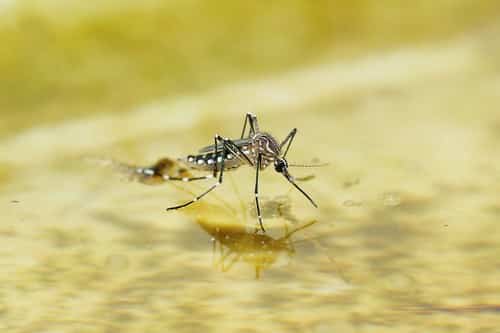
The black salt marsh mosquito, Aedes taeniorhynchus, drives the worst weeks of the year on this island. Its eggs sit in the mud and grass of the marsh along Bohicket Creek and the North Edisto, dormant, sometimes for months. Then a spring tide pushes water high into the marsh, or a heavy summer rain floods it, and the eggs hatch together. Not a trickle. All at once. Ten days later you get a brood that emerges as one enormous wave, and these are strong fliers, capable of covering a mile or more inland from where they hatched. That range puts most of Seabrook well inside the flight zone. Your yard can be immaculate and you will still get hit, because the source is a hundred acres of tidal marsh you do not own and nobody is going to drain.
The freshwater side works on a different clock. Ponds and lagoons run through Crooked Oaks and Ocean Winds, and more sit behind homes across the island. Culex mosquitoes breed at the vegetated edges of that standing water, in the still shallows where cattails and grass slow everything down and organic matter builds up. They do not need a tide. They need water that sits undisturbed for a week or two, which describes a lagoon margin in July almost perfectly. Culex is a night biter and a quieter problem than the marsh broods, so it tends to get blamed on something else. It is also the group most associated with West Nile virus in this part of the country.
Then there is the mosquito breeding in your own yard. The Asian tiger mosquito, Aedes albopictus, lays in containers, and a container is anything that holds a cup of water for a week. Plant saucers. A tarp over the boat. Gutters packed with live oak leaves. The tray under an outdoor shower. Corrugated drain pipe with a low spot in it. Tiger mosquitoes bite during the day, aggressively, around the ankles, and they rarely travel more than a couple hundred yards from where they hatched. If you are getting bitten at two in the afternoon on your own deck, that mosquito almost certainly came from your property or your neighbor’s, and the fix involves emptying and dumping as much as it involves spraying.
The maritime forest ties all of it together. Live oak canopy, palmetto and wax myrtle understory, leaf litter that stays damp underneath. Adult mosquitoes do not fly all day. They spend most of their lives resting in cool, humid, shaded vegetation, coming out to feed at dawn and dusk or whenever something walks past. On a bare, sunny lawn, resting cover is scarce, and populations thin out. Seabrook is the opposite. The understory that makes this island beautiful is also a full day’s worth of shelter within a few feet of your patio, which is why treatment here targets that vegetation rather than the open air.
Contact Us
Mosquito Fogging
We offer monthly and weekly mosquito fogging services for residences throughout the Charleston SC area. Enjoy the outdoors, bug free!
Mosquito Misting System
Our mosquito misting systems in charleston SC provide year-round protection from mosquitos and other biting insects around your property.
Mosquito Misting Systems for Seabrook Island Homes
A misting system is permanent equipment. Flexible tubing gets run through the landscape beds and along the eaves, roughly the way an irrigation line is run, and small nozzles are set at intervals along it, aimed into the shrubs, the beds, the fence line, and the shaded ground where mosquitoes rest. Tubing goes behind plantings and under mulch. A pump and a concentrate reservoir live in an enclosure at the side of the house or in the garage. The system fires short cycles on a timer, set for dawn and dusk when adult mosquitoes are most active, and the air is calm, and each cycle lasts under a minute. There is also a remote trigger, so you can run an extra burst before guests show up on the porch.
- Hardware for a salt-air island. Seabrook is surrounded by water on three sides, and the air here corrodes anything unprotected. We spec corrosion-rated fittings, nozzles and enclosures for coastal installs, because a system that fails in three seasons is not worth putting in.
- We install with architectural review in mind. Tubing is concealed in beds and along trim lines, nozzles sit low and out of sightlines, and the pump enclosure gets placed where it is screened from the street and from neighbors. Nothing about a finished install should be visible from the road.
- Nozzle placement is weighted toward the pressure. If your lot backs to marsh along Bohicket Creek or the North Edisto, that side gets more coverage, because that is where the salt marsh broods arrive from. Pond and lagoon-facing lots get weighted toward the water’s edge and the vegetated bank.
- Unattended operation matters on an island of second homes. The timer runs whether or not anyone is in the house, so a property that sits empty from October to April is still protected the week guests arrive. Owners with rentals use the remote to run a cycle before a changeover.
- Refills and maintenance are included in the service. We come back to top up the concentrate, check nozzles for clogs, verify pressure, and adjust the schedule as the season shifts.
- A botanical concentrate is available if you would rather not run a synthetic product, and it is a common request from owners with young grandchildren or dogs on the property.
Most residential installs take a day. Larger properties, or homes with long marsh frontage and multiple outdoor areas to cover, can run into a second. We walk the lot with you first, mark the zones, and confirm the layout before anything gets installed, so there are no surprises when you see where the tubing goes.
Mosquito Fogging Service on Seabrook Island
Fogging suits people who want the pressure down without permanent equipment on the house. It works well for villas and shared properties where you cannot install hardware, for owners who want to try a season of treatment before committing to a system, and for anyone whose problem is seasonal rather than constant. It is also what we use on larger commercial grounds where a fixed system would not make sense.
Here is what a technician actually does on site. The treatment goes on vegetation, not into open air. Undersides of shrub leaves, the lower canopy, hedge interiors, fence lines, the shaded band under decks and porches, dense ground cover, palmetto and wax myrtle understory, and anywhere the ground stays damp. Those are resting sites, and treating them takes down the adult population living on your property and knocks back new arrivals off the marsh for a period afterward. Products are EPA-registered and applied at label rates.
Source reduction happens on the same visit. We look for standing water and either remove it or tell you what needs to change, and that is often the highest-value part of the appointment. Clogged gutters under live oaks. A saucer under every pot. A tarp holding a gallon in a fold. Boat covers, wheelbarrows, corrugated drainage with standing water in the bends. Where water cannot be drained, like an ornamental pond or a low area that stays wet after every rain, larvicide handles it by killing larvae before they can emerge.
Three cadences, depending on the property and the season:
- Monthly service, which covers most homes through the Lowcountry mosquito season and keeps a baseline down.
- Every two weeks, or weekly, for properties on the marsh edge, lots backing the lagoons, or anywhere the pressure stays heavy through July and August.
- One-time treatments before a specific date, timed a day or two ahead of a wedding, a family reunion, a golf outing, or a party on the porch.
On the commercial side, we work with club and golf course grounds, equestrian facilities, and villa and townhome regimes where a property manager needs the whole community treated on a consistent schedule rather than lot by lot. Barn and paddock areas carry their own pressure, since horses draw biting insects and water troughs and wash areas hold standing water between cleanings. Scheduling around riding hours and course play is part of the arrangement, and we set the route so treatment happens when the area is clear.
Ticks, No-See-Ums, and What Else We Handle
No-see-ums are biting midges, and on Seabrook they come off the same marsh mud the salt marsh mosquitoes do. They are small enough to pass through standard screen, and they swarm hardest at dusk and dawn, particularly on still evenings in spring and fall when there is no wind moving off the water. They are not mosquitoes, and they do not respond to treatment identically, but the same approach helps, because both rest in the same damp, shaded vegetation. Property owners on the creek and river sides of the island notice the biggest difference after treatment. Nobody should promise you complete elimination of midges when they are breeding in tidal mud beyond your property line.
Ticks are a maritime forest problem here. They wait on low vegetation at the edges of paths and clearings, in leaf litter under the oaks, and along the margins of trails around the equestrian centre and the wooded parts of the island. Deer move through Seabrook and carry ticks with them, which is why properties adjoining undeveloped woods and trail corridors see more of them. Treatment focuses on those transition zones, the brushy edge where lawn meets forest, since that is where ticks concentrate and where people and dogs pick them up.
Some of what these insects carry is worth knowing plainly. Mosquitoes in South Carolina can transmit West Nile virus, most often associated with Culex, and eastern equine encephalitis, which is rare but serious and affects horses as well as people. Mosquitoes also transmit canine heartworm, which is why year-round preventive is standard advice from veterinarians in this region. Ticks in the Lowcountry can carry Lyme disease, ehrlichiosis, and Rocky Mountain spotted fever. The lone star tick is also associated with alpha-gal syndrome, an allergy to red meat that develops after a bite and can persist for years. Most bites cause nothing worse than an itch. Reducing the number of bites is still the sensible way to reduce the risk.
Areas We Serve on Seabrook Island
- Homes along the Ocean Winds and Crooked Oaks golf courses
- Beachfront and oceanfront properties along Seabrook’s Atlantic shore
- Marsh-front homes on the Bohicket Creek side
- Properties overlooking the North Edisto River
- Villas and townhome regimes across the island
- The Seabrook Island Equestrian Center and surrounding trail areas
We also work at Bohicket Marina and Freshfields Village just off-island, and across the surrounding area, including Kiawah Island, Johns Island, Wadmalaw Island, Rockville and Ravenel. Elsewhere in the Charleston region, we serve James Island, Folly Beach, Mount Pleasant, Sullivan’s Island, Isle of Palms, Daniel Island, West Ashley, Summerville and downtown Charleston. If you own a property on Seabrook and live somewhere else most of the year, that is a common arrangement for us, and we can handle scheduling and access without you being here.
When to Start, and Why Earlier Is Cheaper
The Lowcountry season is long. Mosquito activity typically picks up in March as temperatures climb, builds through spring, and peaks from June into September when heat, humidity, and summer rain stack together. Activity usually continues into October and November, and a mild winter can keep some level of it going year-round. On Seabrook, the marsh broods add their own timing on top of that, since a high spring tide or a heavy rain can produce a wave of biting adults ten days later regardless of what the calendar says.
Starting in early spring is less work than starting in July. Treat before the first big hatch, and you are suppressing a small population, knocking out overwintering adults and eliminating breeding sites before they produce anything. Wait until August, when the marsh has already delivered several broods, and every container in the yard has been cycling for months, and it takes more visits to get to the same place. If you are having a system installed, booking in winter or early spring means it is running before you need it rather than during the worst of it.
Call 843-270-1729 to set up a free walk-through of your Seabrook property. We will look at the lot, tell you what is producing mosquitoes and what is flying in from elsewhere, and quote a misting system or a fogging schedule based on what we actually see. No contracts, and no obligation from the visit.
Testimonials
Our Blog on Mosquito Control Systems
A single mosquito bite can spread illnesses such as West Nile Virus, Encephalitis, Malaria, chikungunya, and even Heartworm in pets. Ticks are also a threat and can spread Lyme disease, Ehrlichiosis, and Rocky Mountain Spotted Fever. To find out more about how to control these pests and to protect your family, read our blog.
.

No Contracts, No Hassle, No Worries!
Seabrook Island Mosquito Control FAQs
Why are mosquitoes so bad on Seabrook Island?
Water on three sides, essentially. Tidal marsh along Bohicket Creek and the North Edisto produces salt marsh mosquitoes that hatch in synchronized waves after high tides and heavy rain, and those adults fly a mile or more inland. Freshwater ponds and lagoons through the golf courses breed a different group at their vegetated edges. The maritime forest understory gives all of them cool, humid resting cover within a few feet of most patios. Three separate sources feeding the same yard.
Doesn’t the county or the island already spray?
Public mosquito control programs exist in this region and do reduce area-wide populations, but they are aimed at broad coverage rather than individual properties. A truck route or an aerial pass cannot reach the shaded vegetation behind your house, the ground under your deck, or the containers holding water in your yard. That is the gap private treatment fills. Most homeowners who call us have public spraying in their area already and still get bitten on their own porch.
How much does mosquito control cost on Seabrook Island?
It depends on the property, and we will not quote a number without seeing it. Lot size, how much of it you use, whether you back to marsh or a lagoon, the amount of dense vegetation, and whether you want a misting system or recurring fogging all change the price. A marsh-front home with heavy understory is a different job than a villa with a small courtyard. The walk-through is free; we come to you, and you get a real number afterward. No contract.
Do you treat no-see-ums?
Yes, and on Seabrook they are a regular part of the conversation. Biting midges breed in tidal marsh mud and swarm at dusk and dawn, worst on still evenings in spring and fall. Treatment targets the same damp shaded vegetation where they rest, so a mosquito program generally brings midge activity down too. Properties on the creek and river sides notice the most change. Since they breed off-property in marsh you do not control, expect strong reduction rather than elimination.
Is it safe around children and pets?
We apply EPA-registered products at label rates, on vegetation and resting sites rather than into open air. Standard guidance is to keep people and pets off treated areas until things have dried, usually a short window, and the technician will tell you the exact time on the day. Misting cycles are scheduled for dawn and dusk when nobody is outside. If you would rather avoid synthetics altogether, a botanical concentrate is available for both systems and fogging service.
How often should fogging be done?
Monthly works for most homes through the season and keeps a baseline suppressed. If you back to the marsh along Bohicket Creek or the North Edisto, or you sit on a lagoon, every two weeks or weekly holds up better through June, July, and August when pressure is highest. One-time treatments are available when you have a specific date to protect. We usually recommend a cadence after the walk-through, and you can change it as the season shifts.
When does mosquito season start and end here?
Activity generally begins in March, builds through spring, and peaks from June into September. It commonly runs into October and November, and a mild winter keeps low-level activity going through it. Seabrook has its own rhythm on top of that, because the marsh hatches after spring tides and heavy rain rather than on a schedule. A wet stretch in April can produce a bad week well before what anyone would call peak season.
I am only on the island part of the year. Can you still service my property?
Regularly. Plenty of Seabrook properties are second homes or rentals, and a good share of our clients here are not on the island when we treat. Fogging service does not require anyone home. A misting system runs on its own timer whether the house is occupied or empty, and refills and maintenance visits are part of the service, so it is topped up and working when you arrive. Owners who rent use the remote trigger before a changeover.
Will a misting system pass architectural review?
We install with that in mind. Tubing runs concealed in landscape beds, under mulch and along trim lines. Nozzles are small, set low, and positioned out of sightlines. The pump enclosure goes where it is screened from the street and from neighboring properties. During the walk-through, we will show you exactly where each component goes so you can take that to review before anything is installed. If a placement needs to change to satisfy the requirements, we adjust it.
Does salt air damage the equipment?
Untreated hardware corrodes fast on a barrier island, which is why coastal installs get corrosion-rated fittings, nozzles, and enclosures. Nozzles are the part that suffers first, and they get checked at every maintenance visit for corrosion and clogging along with pressure and reservoir level. A system specified for inland use will not last on Seabrook. That is a large part of why our maintenance visits are included rather than billed separately.
Can you treat before a specific event?
Yes. One-time event treatments are a common request here, typically ahead of a wedding, a family gathering over a holiday week, a golf outing, or an outdoor dinner. We schedule the treatment a day or two before, which gives it time to settle and work while the effect is still fresh on the day. If you already have a misting system, use the remote trigger to run an extra cycle shortly before guests arrive.
What other areas do you cover near Seabrook?
Kiawah Island, Johns Island, Wadmalaw Island, Rockville and Ravenel, plus Bohicket Marina and Freshfields Village. Across the wider Charleston area, we work on James Island, Folly Beach, Mount Pleasant, Sullivan’s Island, Isle of Palms, Daniel Island, West Ashley, Summerville and downtown Charleston. Our office is on Daniel Island, and we cover the sea islands regularly rather than occasionally. Call 843-270-1729 if you are not sure whether your address is in range.