

Salt Marsh Mosquitoes: Control Guide for Isle of Palms
- Serving the Lowcountry since 2004
- Rated 5.0 on Google
- Residential and commercial
Request a Free Quote
Tell us a little about your property and we will be in touch.
What are salt marsh mosquitoes and why do they matter on the coast?
Two species dominate the salt marsh mosquito problem along the U.S. Atlantic and Gulf coasts: Aedes sollicitans (the eastern saltmarsh mosquito) and Aedes taeniorhynchus (the black salt marsh mosquito). Both breed in the shallow depressions of coastal salt marshes, and both will make your backyard miserable if you live near the water in Isle of Palms or anywhere in the Lowcountry.
What makes these species different from your average backyard mosquito is their biology. Females lay eggs on dry salt marsh soil, and those eggs sit dormant until a spring tide or heavy rain floods the area. Once flooded, larvae can develop in as little as 4–5 days, which means a single tidal event can produce a massive adult population almost overnight. You don’t get a slow build. You get a surge.
Their range is another problem. Aedes sollicitans typically stays within a few miles of the coast, but young females can move significant distances daily under favorable wind conditions. That puts virtually every home on Isle of Palms squarely in range. Host-seeking flights peak at twilight, though resting females will bite any time a host wanders near.
The health risks are real. Both species are recognized vectors of:
- Eastern equine encephalitis (EEE): A serious neurological disease; approximately one in three people who develop encephalitic EEE infections do not survive, and survivors often face lasting neurological damage.
- Venezuelan equine encephalitis (VEE): Aedes sollicitans is considered a more competent vector of VEE than Aedes taeniorhynchus due to higher transmission rates.
- Dog heartworm: Both species transmit Dirofilaria immitis, a serious risk for pets in coastal South Carolina, where warm temperatures allow year-round transmission.
Because salt marshes are ecologically protected, large-scale habitat modification is rarely an option for homeowners. You can’t drain the marsh. That means source reduction alone is impractical, and protecting your immediate living space requires a different approach entirely.
How to pick mosquito control for Isle of Palms and Charleston
Two providers stand out for coastal residents dealing with salt marsh mosquito pressure in the Isle of Palms and Charleston area. Both offer professional-grade treatments, but their approaches differ in meaningful ways.
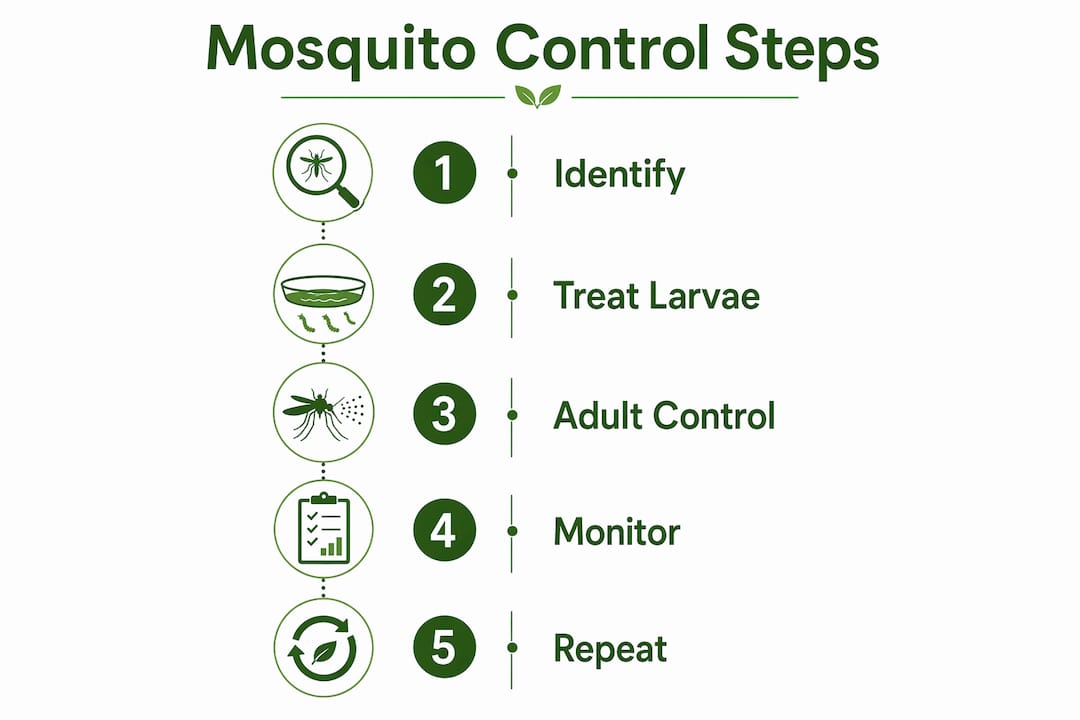
Recurring barrier treatment on a 21-day cycle lines up well with the episodic nature of salt marsh surges, and a no-contract structure gives you room to stop if the results are not there. What matters more than the plan name is whether the crew treats the resting vegetation and the standing water, not just the lawn.
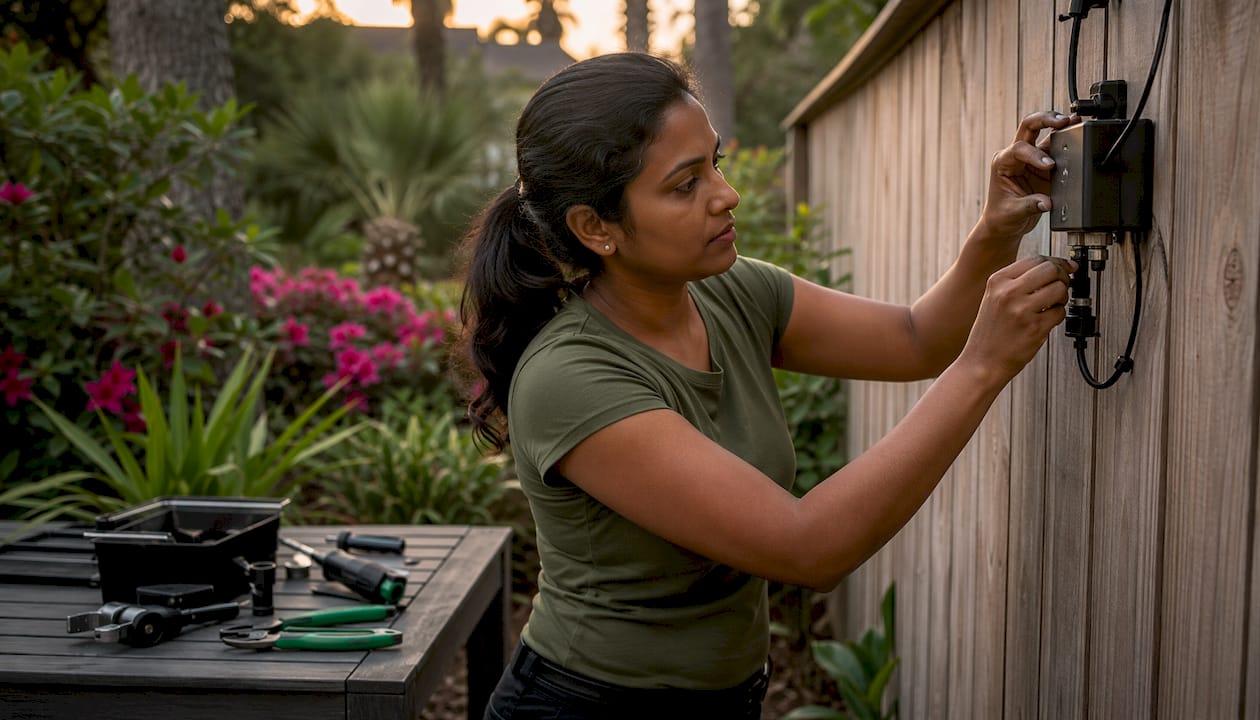
Knockout Mosquito Systems takes a different angle. Rather than relying solely on periodic sprays, they install automated mosquito misting systems that deliver continuous protection around your property. For Isle of Palms residents who deal with unpredictable tidal surges pushing mosquito populations inland, a system that runs on a schedule rather than waiting for a service appointment offers a real advantage. Their fogging and manual spray options round out the offering for homeowners who want professional treatment without a permanent installation.
How do you choose the right mosquito control service in a coastal area?
Choosing a provider near salt marshes is not the same as choosing one for a suburban neighborhood. The biology of these mosquitoes demands a specific kind of expertise.
Ask about integrated mosquito management. The EPA and CDC both recommend an integrated pest management approach that combines surveillance, larval source reduction where possible, and adult treatment. A provider who only offers one method is likely to underperform when a tidal surge hits.
Key criteria to evaluate before you sign:
- Local knowledge: Does the provider understand salt marsh mosquito biology, including the tidal hatching cycle? A generic pest control company may not.
- Treatment variety: Look for providers offering both barrier sprays and automated misting. Barrier sprays handle adult populations after a surge; misting systems provide continuous coverage between service visits.
- Eco-friendly formulations: Salt marsh environments are ecologically sensitive. Ask whether treatments are safe for children, pets, and beneficial insects. Both featured providers offer options in this category.
- Service frequency and contract terms: A 21-day spray cycle works for many homeowners, but if you’re dealing with weekly tidal flooding events, a misting system with daily automated cycles may be more appropriate.
- Satisfaction guarantees: A provider willing to return between scheduled visits if mosquito pressure spikes is worth more than one who won’t.
Pro Tip: Ask any provider whether they treat at the larval stage as well as the adult stage. Targeting larvae before they emerge is generally more effective than adult-only treatments, and it reduces the total amount of insecticide needed.
For broader integrated pest management strategies in residential environments, consulting resources from established pest control professionals can help you ask the right questions before committing to a service plan.
Knockoutmosquito brings year-round protection to Charleston’s coast
Living on Isle of Palms means accepting that salt marsh mosquitoes are a seasonal fact of life. What you don’t have to accept is spending every evening indoors.
Knockoutmosquito installs and maintains automated mosquito misting systems built specifically for Charleston’s warm, humid coastal climate. The systems run on a programmable schedule, so your yard gets treated at dawn and dusk when salt marsh mosquitoes are most active, without you having to call for a service visit after every king tide. Their fogging and manual spray treatments are available for one-time events or as part of a recurring plan, and all options include eco-friendly formulations that are safe for children and pets.
For homeowners who want to understand their options before committing, Knockoutmosquito publishes a mosquito control options guide covering everything from misting systems to fogging. Free on-site evaluations are available, and their 2026 pricing guide is publicly accessible on their website.
Key Takeaways
Effective salt marsh mosquito control in Isle of Palms requires a combination of professional treatment methods, local expertise, and systems that match the unpredictable tidal breeding cycles of Aedes sollicitans and Aedes taeniorhynchus.
| Point | Details |
|---|---|
| Tidal surges drive population spikes | Eggs hatch in 4–5 days after flooding, so mosquito populations can surge after a single tidal event. |
| Source reduction has limits | Salt marsh habitats are ecologically protected; homeowners must rely on professional barrier and misting treatments. |
| Integrated management works best | The EPA recommends combining surveillance, larval control, and adult treatment rather than any single method. |
| Per-visit plans suit occasional use | Recurring barrier treatments start at $79 per visit on a 21-day cycle with no contract required. |
| Knockoutmosquito suits year-round needs | Automated misting systems provide continuous, scheduled protection tailored to Charleston’s coastal conditions. |
Frequently Asked Questions About Salt Marsh Mosquitoes
What makes salt marsh mosquitoes different?
They breed in tidal pools rather than containers, emerge in large synchronized broods after high tides, and fly considerable distances inland. A yard can be treated and still fill up two days later.
Can you stop them at the property line?
Not entirely. You can make the yard inhospitable and cut the resting sites, but pressure keeps arriving from marsh you do not own, which is why coastal properties usually run shorter cycles or daily misting.
Do they carry disease?
The main coastal nuisance species are aggressive biters but are not the primary carriers of concern here. Disease risk in the Lowcountry sits more with container breeding species around the house.
When are they worst?
After a spring tide or storm surge floods the marsh, with the brood emerging roughly a week later. That is why bad weeks seem to follow the tide calendar rather than the temperature.
Recommended
- Mosquito Control Systems in Isle of Palms, SC | Knockout
- How Charleston’s Humid Climate Creates the Perfect Mosquito Breeding Ground
- Mosquito Control Systems in Kiawah Island, SC | Knockout
- Mosquito Control Systems in Johns Island, SC | Knockout
Related reading: How to get rid of mosquitoes in your yard and Mosquito fogging service in Charleston.
You may also like: Mosquito Control for Waterfront Homes That Works and Top 5 Myths Surrounding Mosquitoes.
Ready to take your yard back?
Knockout Mosquito Systems has protected Charleston and Lowcountry properties since 2004. Get a free quote for misting, fogging or barrier treatment.


