

Integrated Mosquito Management: Science-Based Control Guide
- Serving the Lowcountry since 2004
- Rated 5.0 on Google
- Residential and commercial
Request a Free Quote
Tell us a little about your property and we will be in touch.
Integrated Mosquito Management: Science-Based Control Guide
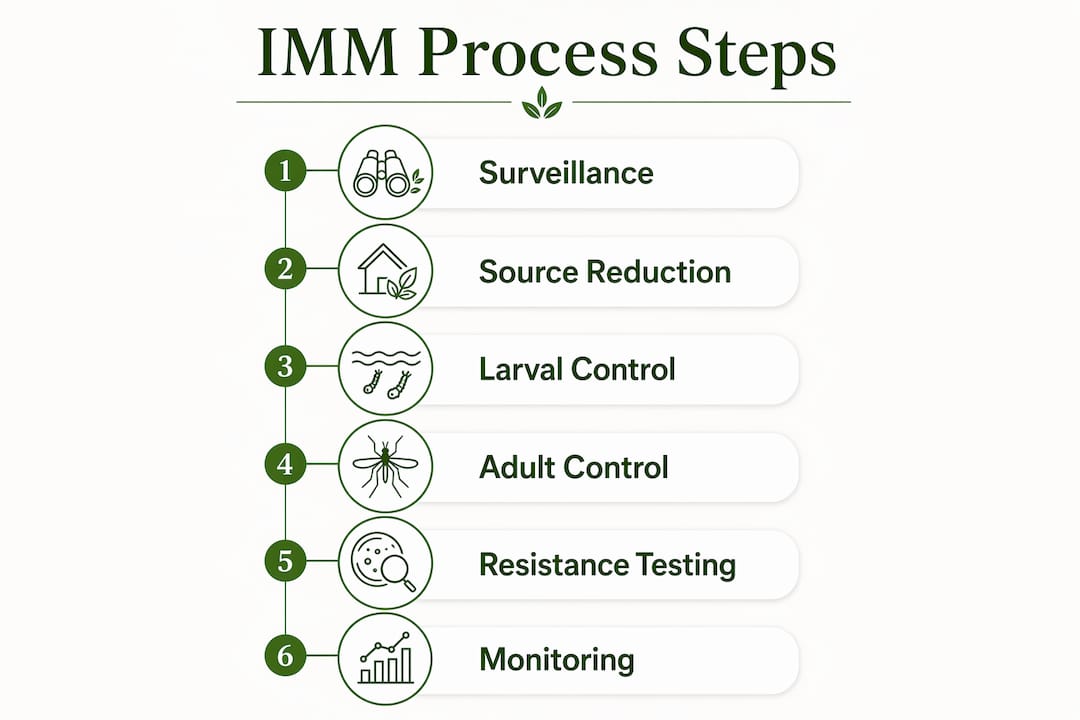
Integrated mosquito management (IMM) is the most effective and environmentally responsible method for controlling mosquitoes, combining surveillance, source reduction, larval and adult control, and resistance testing to reduce populations while using the least pesticide necessary. Endorsed by both the CDC and the EPA, IMM treats mosquito control as a science, not a schedule. Rather than spraying on a fixed calendar, professionals monitor actual population data and intervene only when and where the evidence demands it.
The core components of a well-run IMM program include:
- Surveillance: Tracking species, population density, and pathogen presence to guide every decision
- Source reduction: Eliminating standing water and breeding habitat before mosquitoes ever hatch
- Larval and pupal control: Targeting immature stages with larvicides and biological agents
- Adult control: Applying adulticides precisely, timed to mosquito activity and guided by resistance data
- Resistance testing: Rotating insecticide classes to preserve long-term effectiveness
- Community education: Engaging residents as active participants in population control
- Program evaluation: Measuring outcomes and adjusting tactics based on real results
How surveillance drives integrated mosquito management decisions
Surveillance is the foundation every other IMM component depends on. Without knowing which species are present, at what density, and whether they carry pathogens, any control action is essentially a guess. Professionals use traps and monitoring to collect data on mosquito species and population levels, then feed that information into decisions about timing, location, and method of intervention.
Common surveillance tools and methods include:
- CDC light traps and gravid traps: Capture adult mosquitoes for species ID and pathogen testing
- Larval dippers: White plastic cups on rods used to sample larvae from ditches, ponds, and containers
- Sentinel flocks: Birds monitored for West Nile virus antibodies as an early warning signal
- ArboNET: CDC’s national arboviral surveillance system, integrating human case data with mosquito data
- Citizen complaint mapping: Resident reports that flag hotspots for field verification
Surveillance data also determines whether control is needed at all. A low-density population with no detected pathogens may not warrant treatment, saving both money and environmental exposure.
Source reduction: the first and most critical step
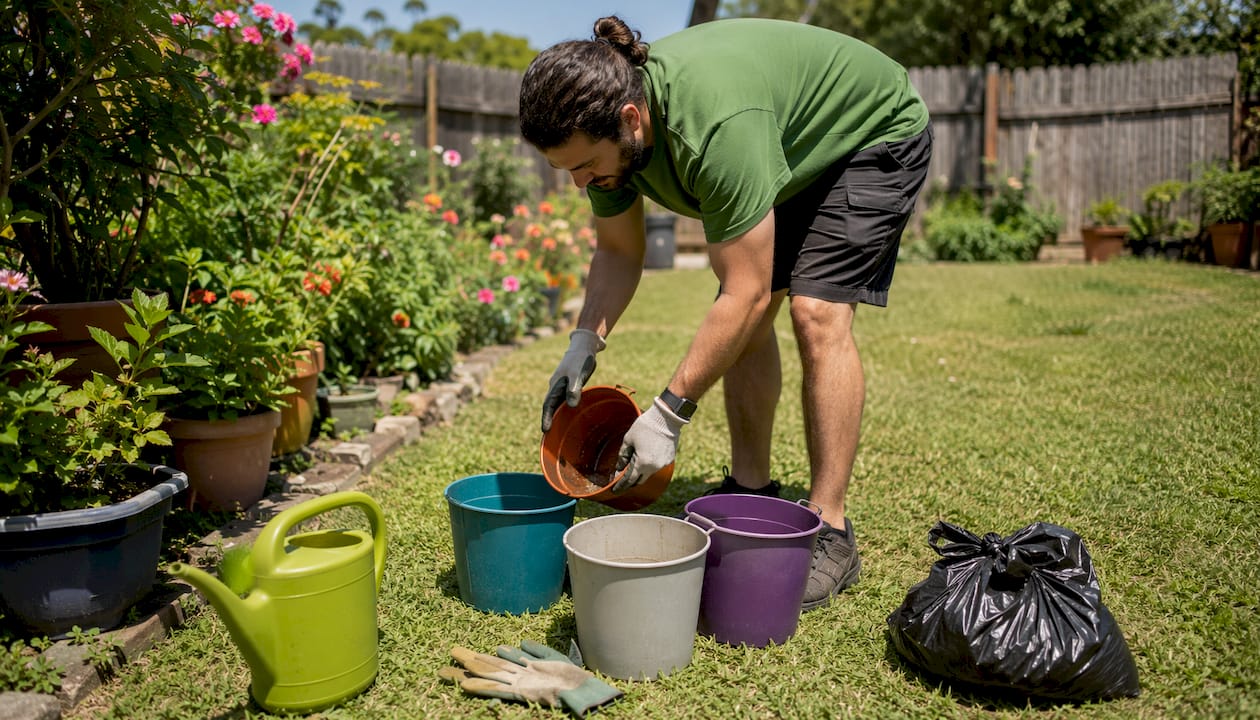
Removing oviposition sites is the most critical first step in any IMM program. Every container of standing water is a potential breeding site, and eliminating those sites cuts mosquito populations before any chemical is ever needed. Mosquitoes can complete their life cycle in as few as 7–14 days during warm weather, which means weekly attention to standing water is not excessive. A walk-through of the containers and low spots that matter most is in finding and clearing breeding sites.
Practical source reduction techniques include:
- Emptying birdbaths, flowerpot saucers, and buckets at least once a week
- Cleaning gutters so water drains freely rather than pooling
- Covering rain barrels with tight-fitting lids or fine mesh
- Filling tree holes with water-resistant foam
- Flipping over wading pools, wheelbarrows, and tarps when not in use
- Clearing dense aquatic vegetation from pond edges to allow fish access to larvae
Pro Tip: Before calling a professional, walk your property after every rain and dump any container holding water for more than four days. That single habit removes the majority of residential breeding habitat at zero cost.
In Awendaw, where warm temperatures and frequent summer rains create near-ideal breeding conditions, source reduction is not optional. It is the difference between a manageable mosquito population and an overwhelming one.
Larval and pupal control methods that stop mosquitoes before they fly
Larval control is more effective and sustainable than relying on adult control alone. Larvae are concentrated, immobile, and accessible in their water habitat, making them far easier to target than flying adults. The EPA emphasizes that controlling mosquitoes at the immature stage maximizes pesticide effectiveness while minimizing the amount applied. The bacterial larvicide behind most of that work is explained in how BTI works against mosquito larvae.
Larviciding and biological control options include:
- Bacillus thuringiensis israelensis (Bti): A naturally occurring soil bacterium that kills larvae without harming mammals, birds, or fish; available as “mosquito dunks” for small water bodies
- Methoprene: An insect growth regulator that prevents larvae from maturing into adults; effective for extended periods in hard-to-drain sites
- Gambusia (mosquitofish): Predatory fish introduced to ornamental ponds, unmaintained pools, and other permanent water bodies to consume larvae continuously
- Granular larvicides: Applied by air or ground to large wetland areas where draining is not feasible
When source reduction cannot eliminate a breeding site, larvicides step in. The goal is always to handle the problem at the water’s edge rather than in the air.
Adult mosquito control strategies within IMM
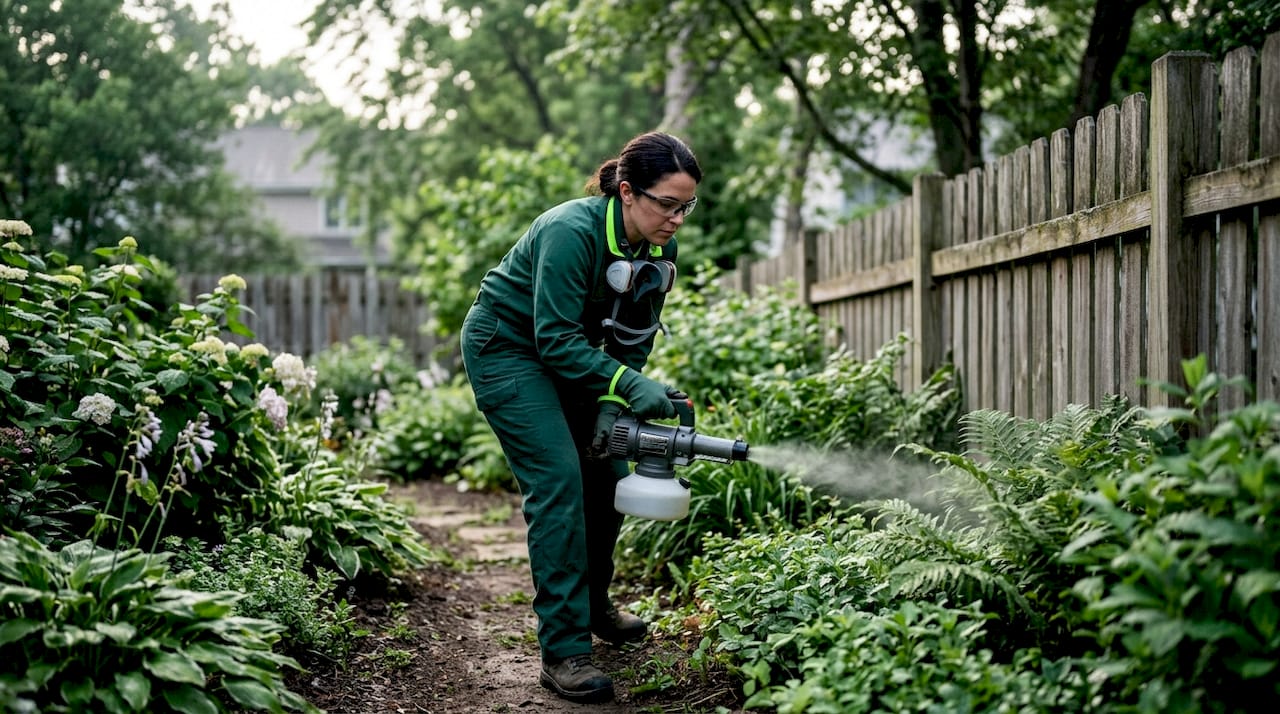
Adulticide application is the last resort in a properly run IMM program, deployed only when surveillance data shows populations or disease risk have crossed a defined threshold. Applying adulticides on a fixed schedule without surveillance data wastes product, accelerates resistance, and exposes non-target insects unnecessarily.
Adult control methods used within IMM include:
- Ultra-low volume (ULV) truck-mounted sprayers: Produce tiny droplets carried by wind currents to contact flying mosquitoes
- Backpack sprayers: Used for targeted barrier treatments around vegetation where mosquitoes rest
- Aerial ULV application: Deployed for large-scale outbreaks or post-disaster situations
- Automated misting systems: Timed to release at dusk and dawn when mosquitoes are most active, minimizing exposure to pollinators
Timing matters as much as product selection. Adulticides applied at dusk or dawn reduce contact with bees and butterflies, which are far less active at those hours. Knockoutmosquito’s automated misting systems for Charleston-area homes operate on exactly this principle, delivering barrier treatments at the times mosquitoes are flying, not on a rigid daytime schedule.
Why insecticide resistance testing belongs in every IMM plan
Repeated use of the same insecticide class causes resistance, which reduces control effectiveness over time. This is not a theoretical risk. Resistance develops when susceptible mosquitoes die and resistant individuals survive to reproduce, gradually shifting the population toward tolerance of the chemical being used.
Resistance management best practices include:
- CDC bottle bioassay: Field-collected mosquitoes are exposed to insecticide-coated bottles; mortality rates compared to a susceptible lab colony reveal resistance levels
- Rotating insecticide classes: Switching between organophosphates, pyrethroids, and other classes prevents any single resistance mechanism from dominating
- Integrating non-chemical methods: Biological control and source reduction reduce reliance on any one insecticide, slowing resistance development
- Documenting results: Keeping resistance data by location and season allows programs to spot trends before failures occur
A program that skips resistance testing is essentially flying blind. The product that worked last season may not work this season, and the only way to know is to test.
Monitoring and evaluating IMM program effectiveness
Monitoring confirms whether interventions are actually working, and it drives the adaptive decisions that keep a program improving. Ongoing monitoring of larval, pupal, and adult populations verifies that control measures are reducing numbers and not just displacing them.
Monitoring and evaluation best practices include:
- Comparing pre- and post-treatment mosquito counts using standardized traps
- Tracking disease surveillance data alongside entomological data for a complete picture
- Evaluating equipment calibration to confirm ULV droplet size stays within label specifications
- Reviewing public complaint volumes as a proxy for perceived control success
- Documenting resistance test results and adjusting product rotation accordingly
Programs that publish their monitoring data build public trust and create a feedback loop that makes each season’s plan better than the last.
Recent advances in precision mosquito control
The shift from broad-area spraying to precision mosquito control is the defining trend in IMM right now. Geographic Information Systems (GIS), smart surveillance traps, and big data analytics now allow mosquito control districts to map vector distribution at fine spatial scales and intervene before outbreaks build.
Key advances and current best practices include:
- GIS-based hotspot mapping: Overlays entomological data with housing density, drainage patterns, and disease case locations to prioritize treatment zones
- Smart traps with remote data transmission: Eliminate manual collection delays, giving programs near-real-time population counts
- Genomic resistance profiling: Rapid sequencing to identify resistance mutations in local populations before they cause control failures
- “Check-then-treat” protocols: Field inspectors verify threshold conditions before any application is made, replacing calendar-based spraying
- Citizen science platforms: Residents submit mosquito sightings and breeding site photos via apps, expanding surveillance coverage at low cost
Knockoutmosquito applies these principles locally, offering eco-friendly, tailored mosquito control solutions designed around the specific conditions of the Charleston and Awendaw area rather than generic treatment schedules.
Community education and public involvement strategies
Community involvement multiplies the reach of any professional control program. Homeowners who eliminate standing water on their own properties reduce the breeding habitat that professionals cannot easily access, and educated residents are far more likely to cooperate with treatment schedules and report new breeding sites.
Effective community engagement tactics include distributing source reduction guides through social media and neighborhood apps, hosting community cleanup events targeting vacant lots and drainage areas, and placing educational booths at local events where residents can view larvae under a microscope. Wearing protective outdoor clothing during peak mosquito hours is another practical layer of personal protection that complements neighborhood-level control. Programs in Bayamón, Puerto Rico demonstrated how house-to-house visits and children’s book readings, combined with passive emanator distribution, can sustain community engagement across an entire outbreak season.
Regulatory and environmental compliance considerations
Every IMM program in the United States operates within a framework of federal and state regulations. The EPA registers all pesticides used in mosquito control under the Federal Insecticide, Fungicide, and Rodenticide Act (FIFRA), and label directions are legally binding. Applying a product at a rate or location not specified on the label is a federal violation, not just a best-practice deviation.
State-level mosquito control districts must also comply with the Clean Water Act when applying pesticides over or near water bodies, typically through a National Pollutant Discharge Elimination System (NPDES) permit. South Carolina programs, including those serving Awendaw, follow guidelines set by the South Carolina Department of Health and Environmental Control (DHEC) alongside federal EPA and CDC standards. Environmental stewardship, including protecting pollinators and non-target aquatic species, is built into compliant IMM programs from the start.
Health and safety precautions for IMM personnel
Field technicians applying larvicides and adulticides face direct exposure risks that require consistent protective protocols. Personal protective equipment (PPE) requirements vary by product label but typically include chemical-resistant gloves, eye protection, and long-sleeved clothing. Organophosphate adulticides require additional respiratory protection in enclosed or poorly ventilated application scenarios. Households with animals tend to want more detail, which what pet safe yard treatment really means provides.
Heat illness is a real occupational hazard for field staff working in South Carolina summers, often competing with chemical exposure as the primary safety concern. Programs should schedule field work during cooler morning hours, provide hydration stations, and train supervisors to recognize heat exhaustion symptoms. Equipment calibration checks before each application run protect both the applicator and the public by confirming that spray droplet size and output rates match label specifications.
How Knockoutmosquito puts IMM to work in Awendaw

Knockoutmosquito brings the full IMM framework to residential and commercial properties across the Charleston area, including Awendaw. From automated misting systems timed to mosquito activity windows to manual barrier treatments and eco-friendly larvicide applications, every service is built around the same science that guides professional mosquito control districts. Free on-site evaluations let the team assess your specific breeding conditions before recommending a treatment plan. Explore mosquito control options tailored to your property, or learn more about how misting systems work in Charleston’s climate.
Key Takeaways
Integrated mosquito management works because it targets every life stage with the right tool at the right time, guided by surveillance data rather than a fixed spray schedule.
| Point | Details |
|---|---|
| Surveillance drives every decision | Trap data, larval surveys, and ArboNET reports determine if, when, and where control is needed. |
| Larvae are the highest-value target | Immobile and concentrated in water, immature mosquitoes are far easier to eliminate than flying adults. |
| Life cycle as short as 7–14 days | Warm-weather breeding demands weekly standing water removal to break the cycle before adults emerge. |
| Resistance testing protects long-term efficacy | CDC bottle bioassays and insecticide class rotation prevent resistance from making treatments ineffective. |
| Community participation extends program reach | Residents who eliminate backyard breeding sites reduce the habitat professionals cannot easily treat. |
Frequently Asked Questions About Integrated Mosquito Management
Is integrated management just a term for spraying less?
No. It sequences the work. Surveillance finds where mosquitoes are breeding, source reduction removes what can be removed, larvicide handles the water that stays, and adult treatment is what remains rather than the whole plan.
Does it work on a single residential lot?
Yes, at a smaller scale. Walking the property, dumping and screening water, treating what cannot be drained, and then treating adults is the same sequence a mosquito district uses.
Why does surveillance matter for a homeowner?
Because it tells you which species you have. Container breeders and salt marsh species behave differently, and treating for the wrong one wastes visits.
Does this approach reduce chemical use?
Usually. Cutting breeding sites lowers how much adult treatment a property needs to stay comfortable, though it rarely removes the need entirely. How much residual service still gets used is discussed in whether weekly fogging is worth the cost.
Recommended
- Effective Mosquito Control to Protect Your Home | Knockout
- Effective Mosquito Fogging Solutions to Protect Your Family
- Mosquito Control Services | Learn About Mosquito Control Options
- The Dangers of Mosquitoes & Why Control Matters | Knockout
You may also like: Mosquito Control for Waterfront Homes That Works.
Ready to take your yard back?
Knockout Mosquito Systems has protected Charleston and Lowcountry properties since 2004. Get a free quote for misting, fogging or barrier treatment.


