
Mosquito Control Systems in Bluffton, SC2026-08-25T03:06:38+00:00

Mosquito Control Systems in Bluffton, SC

Bluffton gets pressure from two directions at once. To the south and east, the May River and its tidal creeks flood a wide band of salt marsh twice a day, and that marsh produces mosquitoes in numbers no yard-level fix can absorb on its own. Inland, the master-planned communities along Buckwalter Parkway and Bluffton Parkway are built around stormwater lagoons, hundreds of them, and the vegetated edges of those lagoons breed a different set of species. Add pine flatwoods, wooded buffers, and the live oak canopy over Old Town, and you have shade and humidity holding adults at ground level through the middle of the day.

Knockout Mosquito works across Bluffton and the surrounding Beaufort County communities. We install and service misting systems on lagoon-front lots in Hampton Lake and Hampton Hall, on marsh-facing properties along the May River, on the larger parcels inside Palmetto Bluff, and on tighter lots in Sun City Hilton Head, Rose Hill and Old Town. We also run fogging routes for homeowners who want treatment without hardware, with the same technicians and products whether you are off May River Road or Highway 170.

Book a free property walk-through, and we will tell you what you are dealing with, where it is breeding, and what it costs to knock down. No contract, no obligation. Call 843-270-1729.

Why Bluffton Yards Get Hit Harder

Why Bluffton Yards Get Hit Harder

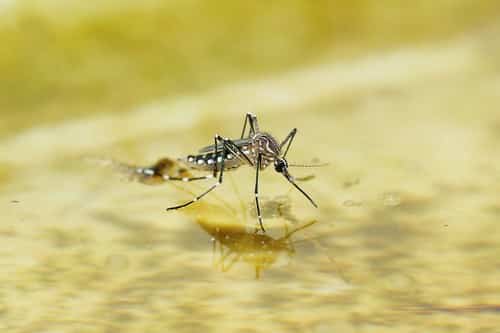
The salt marsh is the biggest single source. Aedes taeniorhynchus, the black salt marsh mosquito, lays eggs in damp soil and wrack above the normal tide, and they sit dormant until water reaches them again. A spring tide or heavy summer rain floods thousands of acres along the May River, Bull Creek and the smaller tidal creeks at once, and the eggs hatch synchronously. A week or so later you get a brood. These are strong fliers, capable of a mile or more, so a house well back from the water can go from tolerable to unusable overnight without anything changing in the yard.

The freshwater lagoons work on a slower schedule. Nearly every planned community here uses a connected lagoon system for stormwater, and Culex mosquitoes breed along the vegetated margins where water sits still against grass, cattails and shoreline plantings. They also breed in the culverts, drop inlets and roadside swales feeding those lagoons. Culex bite at night, carry West Nile virus, and produce continuously rather than in pulses. A lagoon-front lot in Hampton Lake or Berkeley Hall can have both problems, marsh broods arriving from the south and lagoon production twenty feet off the patio.

Then there is what your own yard makes. Aedes albopictus, the Asian tiger mosquito, breeds in containers and needs very little water. Saucers under potted plants, clogged gutters, tarps, boat covers, the fold in a pool cover, the downspout extension nobody has looked in since it went on. This is the striped mosquito that bites you at two in the afternoon while you are weeding. Its flight range is short, often under a few hundred feet, so when tiger mosquitoes are the problem the source is on your property or your neighbour’s.

Cover keeps adults alive between blood meals. Old Town’s live oaks throw dense shade over the streets around Calhoun Street and the bluff, and under that canopy the air stays humid and still even on a breezy afternoon. Pine flatwoods and wooded buffers do the same at a larger scale, along with palmetto understory and thick planting against a foundation. Mosquitoes rest there all day and move to the edges to bite. Treating those resting sites is the point of both misting and fogging.

Contact Us


    Mosquito Fogging

    We offer monthly and weekly mosquito fogging services for residences throughout the Charleston SC area. Enjoy the outdoors, bug free!

    Mosquito Misting System

    Our mosquito misting systems in charleston SC provide year-round protection from mosquitos and other biting insects around your property.

    Mosquito Misting Systems for Bluffton Homes

    A misting system is permanent hardware installed around the perimeter of your outdoor space. Flexible tubing runs along fence lines, under eaves, through planting beds, and up into trees, hidden the way irrigation is hidden, with small nozzles set across the areas where mosquitoes rest. A pump and reservoir sit out of the way. The system runs short automatic cycles at dawn and dusk when mosquitoes are moving, and the air is still, and you can trigger it remotely before guests arrive. Refills and maintenance are included, so nozzles get checked and tubing adjusted as plantings grow in.

    A few things we do differently on Bluffton properties:

    • Marsh-facing and lagoon-facing coverage. On a lot backing onto May River marsh or a community lagoon, the pressure arrives from one direction, so nozzle placement weighs toward that edge and the vegetation between water and house rather than spreading evenly.
    • Large lots need longer runs. Palmetto Bluff parcels, the bigger homesites in Belfair and Berkeley Hall, and any property with a deep rear buffer need more tubing, more nozzles, and a pump sized to hold pressure across the loop. We measure perimeter before quoting.
    • Most Bluffton communities have an architectural review board with rules on exterior changes. We install to be invisible: tubing behind trim and fence rails, buried in mulch lines, nozzles matched to what they mount on, reservoir sited out of sight from the street.
    • Salt air corrodes cheap hardware. Near the May River and the tidal creeks, we use fittings and mounts chosen to hold up in that air, and we check them at service visits instead of waiting for a failure.
    • A botanical concentrate is available if you would rather avoid conventional insecticide, which suits households with young children, pond features or heavy pollinator planting. We will be straight about how it compares.

    Most installs take a few hours and finish in one visit. A large parcel with a long perimeter or awkward access may need a second. We walk the property with you first, agree on nozzle placement and where the reservoir goes, and nothing goes in until you sign off.

    Mosquito Fogging Service in Bluffton

    Fogging suits people who do not want hardware on the property. Renters, seasonal residents, homeowners who would rather not go through architectural review, and anyone who wants to try treatment before committing to a system. It is also the right answer for a one-off, a wedding on the bluff or a party out back.

    A fogging visit is not a lap of the lawn with a blower. A technician treats the underside of foliage where mosquitoes rest, the shaded lower canopy, shrub beds against the house, fence lines, the shady side of the garage, and dense ground cover. That is where residual has to land to matter. We deal with sources at the same time: standing water in saucers and gutters, tarps and covers, downspout extensions, bird baths, blocked drains and low spots. Water that cannot be tipped out- a rain barrel or a drainage inlet, or a lagoon margin- gets larvicide so it stops producing. Everything applied is EPA-registered and used at label rates.

    Three ways to run it:

    • Monthly through the season, the usual starting point for most Bluffton yards.
    • Every two to three weeks on heavy-pressure lots, generally marsh-facing and lagoon-front properties where reinfestation is constant.
    • One-time treatment ahead of an event, applied a day or two before so it has settled and is at full strength when people arrive.

    No contracts on any of it. If it is not working, tell us, and we will change the approach.

    Ticks, No-See-Ums, and What Else We Handle

    Sand gnats are their own category of misery. The biting midges people call no-see-ums breed in wet salt marsh mud, and along the May River they come off the marsh in huge numbers in spring and again in autumn, worst at dawn and dusk on still days. They pass through standard window screens. Nothing eliminates them, but treating the vegetation they rest in and running a misting system on dawn and dusk cycles cuts what reaches your porch.

    Ticks live in the pine flatwoods, the wooded buffers between neighbourhoods, leaf litter along trail edges, and the strip where mown lawn meets brush. Lone star ticks are common here and aggressive. If your property backs onto woods, if you have dogs moving in and out of cover, or if your kids play at the edge of a buffer, tick treatment along that boundary is worth doing at the same time.

    There are health reasons behind all of this. Culex mosquitoes transmit West Nile virus, and freshwater swamp habitat in the region supports the cycle for eastern equine encephalitis, rare but serious. Ticks in South Carolina are associated with Lyme disease, ehrlichiosis, and Rocky Mountain spotted fever, and lone star tick bites are linked to alpha-gal syndrome, a delayed allergy to red meat reported across the Southeast. Mosquitoes also transmit canine heartworm, a year-round concern and a reason to keep dogs on preventive measures, whatever you do to the yard.

    Areas We Serve Around Bluffton

    • Old Town Bluffton, including the streets around Calhoun Street, the bluff and Oyster Factory Park
    • Palmetto Bluff and the New Riverside area along May River Road
    • Sun City Hilton Head and the Okatie side of Highway 170
    • Hampton Hall, Hampton Lake and the Buckwalter Parkway corridor
    • Belfair, Berkeley Hall and Rose Hill
    • Pritchardville and the neighbourhoods along Bluffton Parkway toward US 278

    We also serve Hilton Head Island, Okatie, Hardeeville, Ridgeland, and Beaufort and Port Royal to the north. If you are outside these and not sure whether we reach you, call and ask. It is usually a yes.

    When to Start, and Why Earlier Is Cheaper

    The Lowcountry season is long. Activity picks up in March as nights warm, builds hard through May and June, and stays heavy through July, August, and September. October and November still bite in a mild year, and marsh broods appear any time a big tide or tropical system floods the marsh. Overwintering Culex are present before the first warm week.

    Starting early costs less because you are treating a small population instead of a large one. Get ahead of the first broods and clear container sources in March or April, and you spend the summer holding a low number. Wait until late June, when the marsh has flooded twice, every saucer in the yard has been productive for two months, and the first several treatments go on catching up. Mid-season is fine; we start plenty of properties in July, it just takes longer. Call 843-270-1729 for a free walk-through, and we will find the sources and quote it straight.

    Testimonials

    Our Blog on Mosquito Control Systems

    A single mosquito bite can spread illnesses such as West Nile Virus, Encephalitis, Malaria, chikungunya, and even Heartworm in pets. Ticks are also a threat and can spread Lyme disease, Ehrlichiosis, and Rocky Mountain Spotted Fever. To find out more about how to control these pests and to protect your family, read our blog.

    .

    No Contracts, No Hassle, No Worries!

    Bluffton Mosquito Control FAQs

    Why are mosquitoes so bad in Bluffton?

    Location. Bluffton sits between a large salt marsh system on the May River and a network of freshwater lagoons inland, so marsh broods and steady lagoon production feed the same yards. Warm nights extend the season at both ends, humidity keeps adults active, and the live oak canopy and pine flatwoods give them shaded resting cover through the day. Container breeding in yards adds a third source.

    Doesn’t Beaufort County already spray for mosquitoes?

    Beaufort County operates a mosquito control programme, and county-level work aims at populations across a wide area. That is a different job from clearing your yard. County treatment does not reach the shrubs against your house, the saucers under your pots, the gutter that has not drained since spring, or the vegetation between your patio and the lagoon bank. Property-level service handles the sources and resting sites on your own lot, where the mosquitoes biting you live.

    How much does mosquito control cost in Bluffton?

    It depends on the property. Lot size, perimeter length, how much vegetation there is, whether you back onto marsh or a lagoon, and whether you want misting or fogging all change the number. A quarter-acre lot in Sun City and a multi-acre parcel in Palmetto Bluff are not comparable jobs. We quote after a free walk-through, so the price reflects what is there rather than a guess. No obligation, no contracts.

    Can you do anything about no-see-ums and sand gnats?

    We can reduce them. Sand gnats breed in salt marsh mud, so the source sits outside your property line and cannot be removed the way a container can. What works is treating the vegetation they rest in around the house and running a misting system on dawn and dusk cycles, when they are most active. Properties along the May River see a real difference, though not the near-total relief you get with mosquitoes. Anyone promising to wipe them out is selling you something.

    Is this safe around kids and pets?

    We use EPA-registered products applied at label rates, the standard those products are tested and approved against. Keep children and pets off treated areas until the application dries, usually around half an hour, then normal use is fine. Misting cycles run at dawn and dusk when nobody is outside, and they are short. A botanical concentrate is available if you would rather avoid conventional insecticide. Tell the technician about fish ponds, beehives, or pollinator plantings, and we adjust placement.

    How often does fogging need to happen?

    Monthly through the season handles most Bluffton yards. Properties with constant reinfestation, marsh-facing lots, and homes right on a lagoon do better on a two- to three-week cycle because new adults keep arriving between visits. Heavy rain, a big tide, or a tropical system can trigger a brood that warrants an extra treatment. We recommend a cadence after seeing the property, and you can change it mid-season.

    When does mosquito season start and end here?

    Activity usually begins in March, builds through May, and peaks across the hot months from June into September. Numbers taper in October and November, but a mild autumn keeps biting going close to the holidays, and marsh broods show up any time a large tide or storm floods the marsh. The Lowcountry has a short quiet period rather than a real off-season. Most Bluffton customers run service from March or April through October.

    I am on a lagoon-front lot. Does that change the approach?

    Yes. The lagoon edge is a production site, so treatment weighs toward the bank, the shoreline plantings, and the vegetation between water and house rather than spreading evenly. Larvicide goes into still water along the margin and into culverts or inlets on your property, and misting nozzles concentrate on the water-facing side. We also look at the swale or drainage path running to the lagoon, which often produces more than the lagoon itself.

    My community has an architectural review board. Will that be a problem?

    Not usually. Misting systems install like irrigation, and we run tubing behind trim, along fence rails, and under mulch so it is not visible from the street or a neighbour’s lot. Nozzles are small and matched to whatever they mount on. The pump and reservoir go somewhere discreet, often near existing equipment. If your community needs a submission first, we walk the layout with you so you know what to describe on the form.

    Can you treat before a wedding or party?

    Yes, one-time event treatments are a regular part of what we do around Bluffton, particularly for outdoor weddings, oyster roasts, and graduation parties. Best timing is one to two days before, so the application has settled and is at full residual when people arrive. Tell us where guests will be standing and eating and where the tent is going, and we focus treatment there and on the shaded vegetation around the edges.

    How long does a misting system take to install?

    Most residential installs finish in a few hours on a single visit. Larger properties with long perimeters, mature landscaping, or awkward access- some Palmetto Bluff and Belfair parcels, for example- can run longer or need a second visit. Before anything goes in, we walk the property with you and agree the nozzle layout and where the pump sits. You can use the yard the same day, and the first cycle runs the following dawn or dusk.

    What other areas near Bluffton do you cover?

    We work throughout southern Beaufort County and into Jasper County, including Hilton Head Island, Okatie, Pritchardville, Hardeeville and Ridgeland, along with Beaufort and Port Royal to the north. Within Bluffton, we service Old Town, Palmetto Bluff, Sun City Hilton Head, Hampton Hall, Hampton Lake, Belfair, Berkeley Hall, Rose Hill and the streets along Buckwalter Parkway and Bluffton Parkway. If your address is in between, call 843-270-1729 and we will confirm.